
Blepharis ciliaris
Blepharis ciliaris
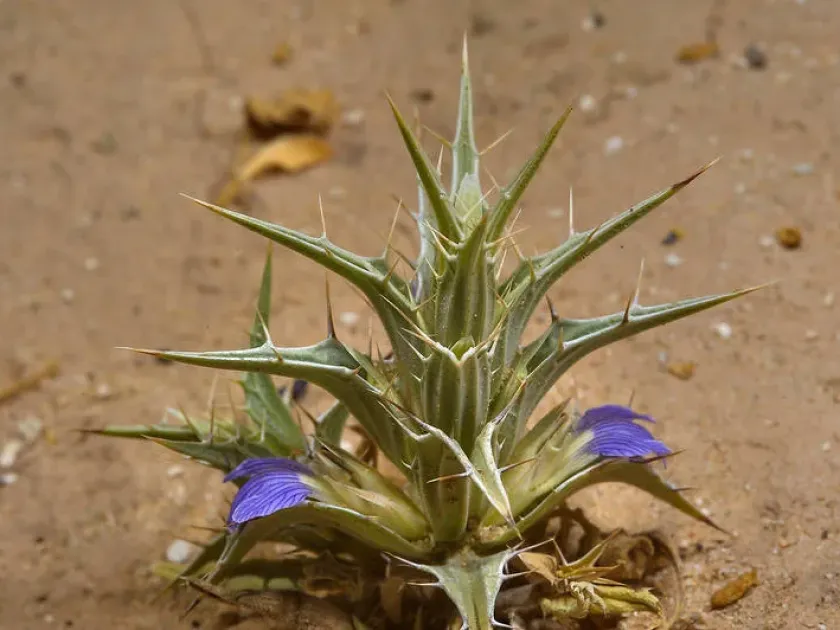
Description
Growing requirements
Blepharis ciliaris is a perennial herbaceous plant belonging to the Acanthaceae family. It is primarily found in arid and semi-arid regions of Africa and parts of the Arabian Peninsula, where it has evolved to thrive in harsh environments characterized by prolonged droughts and intense heat.
The plant exhibits remarkable xerophytic adaptations, including tough, spiny leaves and a deep root system designed to access subsurface moisture. These traits allow the species to maintain biological activity when many other plants enter dormancy or perish due to lack of water.
It flourishes in sandy, gravelly, or stony soils that offer excellent drainage. The species is highly tolerant of saline soil conditions, making it an excellent candidate for stabilizing desert soils and supporting land restoration efforts in neglected agro-ecological zones.
Environmental conditions for Blepharis ciliaris are defined by high thermal requirements. It requires significant sunshine and is not frost-tolerant, meaning its agricultural potential is strictly confined to tropical and subtropical areas where the growing season is not interrupted by cold snaps.
In terms of agricultural utility, the plant serves as a vital source of roughage for livestock, particularly camels, goats, and sheep. Despite its spiny texture, the forage is nutritious and provides essential minerals during the dry season when green vegetation is otherwise completely unavailable.
Main diseases and pests
Overgrazing poses the most significant threat to the sustainability of Blepharis ciliaris populations. Excessive pressure from livestock during the growing season prevents the plants from flowering and dispersing seeds, leading to a steady decline in stand density.
The species is generally robust against common agricultural pests, thanks to the presence of secondary metabolites that act as natural deterrents. However, in poorly managed or excessively irrigated settings, root pathogens can emerge as a concern.
Invasive weed species that compete for moisture during the brief rainy season can displace Blepharis ciliaris in its native habitat. Integrated management practices are needed to control weed encroachment without damaging the fragile desert ecosystem.
Climatic instability, including shifts in the timing and intensity of rainy seasons, creates physiological stress for the plant. Reliable seed production is often linked to specific weather triggers, which are becoming increasingly unpredictable due to climate change.
Lack of standardized cultivation protocols makes it difficult for farmers to establish new stands. The focus remains on sustainable wild-harvest management rather than intensive agricultural cropping, as the plant is difficult to domesticate at a commercial scale.