
Black elderberry
Sambucus nigra L.
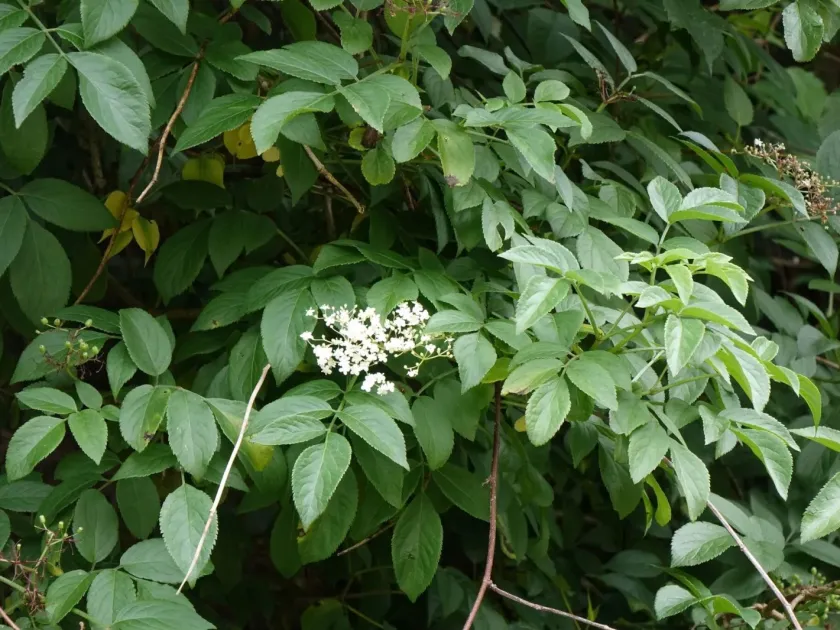
Description
Sowing dates
Black elderberry (Sambucus nigra L.), a member of the Adoxaceae family, is commonly propagated vegetatively via hardwood cuttings. Planting is best performed during the dormant season, specifically in early spring or late autumn.
Hardwood cuttings should be taken from vigorous one-year-old shoots. When planting in the field, it is crucial to ensure that at least two buds are buried underground to facilitate strong rooting and establishment.
Seed propagation is possible but less common in commercial farming due to the need for natural stratification. Seeds must be exposed to cold temperatures over winter to break dormancy and ensure uniform germination.
Selecting the right site is essential for long-term productivity. Elderberry thrives in full sun but can tolerate partial shade; however, optimal fruit set and quality are achieved in bright, open locations.
Spacing is a critical factor for plantation management. A minimum distance of 3 to 4 meters between rows and plants is recommended to allow for equipment access and to prevent overcrowding, which can encourage disease.
Growing requirements
Sambucus nigra prefers deep, fertile, and moist soils with a slightly acidic to neutral pH. While it is adaptable, it performs poorly in waterlogged soils or heavy clays without proper drainage systems.
The plant is relatively hardy and adapted to temperate climates. It requires consistent moisture levels during the growing season to support its fast-growing habit and heavy fruit production.
Fertilization should focus on organic matter and balanced NPK ratios. Applying compost or well-rotted manure in early spring provides a steady release of nutrients, which supports vegetative growth and flower development.
Pruning is essential for sustainable yields. Elderberries produce most of their fruit on one-to-two-year-old wood, so a systematic thinning of older branches is necessary to rejuvenate the shrub and improve light penetration.
During extreme dry spells, supplemental irrigation is required to maintain plant vigor. Drought-stressed plants often suffer from reduced yield and are more susceptible to secondary pests and fungal infections.
Yield
Yield potential varies depending on the variety and management practices. A healthy, mature shrub can yield between 5 and 15 kilograms of berries per season, depending on soil fertility and weather conditions.
Harvesting is typically performed once the berries are fully black and clusters are well-formed. It is vital to harvest during dry weather to prevent molding of the fruit clusters during transport or storage.
Elderberry fruit and flowers have significant commercial value in the food, beverage, and pharmaceutical industries. They are highly sought after for their high antioxidant, vitamin C, and flavonoid content.
Flowers should be harvested at peak bloom for medicinal use, ensuring they are free from moisture. Proper handling after harvest, such as rapid cooling or immediate drying, is necessary to maintain the product's quality.
Post-harvest processing often involves rapid freezing to preserve the bioactive compounds. This method ensures that the raw material retains its market value for use in syrups, extracts, and nutraceuticals.
Main diseases and pests
Black elderberry is relatively resilient, but it can be affected by specific pests such as aphids and spider mites. These insects tend to congregate on the underside of leaves and young stems, drawing sap.
Fungal diseases like powdery mildew can occur, especially in stagnant or humid environments. Proper crown management through regular thinning is the primary cultural control method to improve air circulation.
Integrated Pest Management (IPM) is highly recommended for elderberry crops. This involves monitoring pest populations and utilizing biological controls or targeted applications of soft insecticides when absolutely necessary.
Weed control is also important, especially in young plantations. Using mulches helps suppress competing vegetation and retains soil moisture, reducing the stress that could otherwise make the shrubs prone to infection.
Strict sanitation measures, such as removing fallen leaves and pruning debris, are effective ways to reduce the inoculum load of pathogens. Maintaining a clean orchard is fundamental to successful elderberry cultivation.