
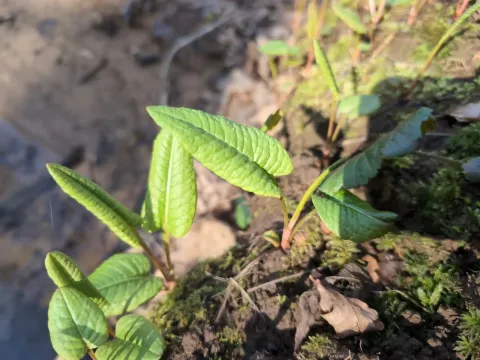
Bistort
Bistorta (L.) Scop.
Bistort (Bistorta officinalis) is a perennial herb belonging to the Polygonaceae family. It naturally thrives in moist, fertile meadows and requires well-drained but consistently humid soil for optimal growth.
What the section contains


Bistort
The plant is native to the temperate regions of Europe and Northern Asia, displaying exceptional cold tolerance and adaptability to varied soil pH levels, although it prefers slightly acidic to neutral ground.
Botanical characteristics include a thick, twisted rhizome and basal leaves that form a dense rosette. The plant requires significant space for root development and benefits from high organic matter content in the soil.
Cultivation practices involve site preparation that allows deep root penetration, as the rhizome can grow significantly large when given enough space and soil aeration.
Sunlight requirements are flexible, as the plant grows well in full sun or partial shade, making it a versatile choice for different types of agricultural landscapes and riparian buffer zones.
Bistort is primarily cultivated for its medicinal properties, specifically the high concentration of tannins found in the rhizomes, which are harvested after 3 to 4 years of growth.
In addition to its pharmaceutical value, the plant produces significant above-ground biomass, which can be utilized as a high-protein supplement in livestock feed rations.
The harvest should be conducted during the dormant period, either in late autumn or early spring, to ensure that the active compound levels in the rhizomes are at their peak.
Sustainable yield management involves rotational planting schemes that maintain soil fertility and allow the rhizomes to reach maturity without exhausting the land's nutrient reserves.
For decorative and erosion control purposes, the plant provides high coverage, acting as an effective ground cover that prevents soil loss on sloped agricultural or ornamental lands.
The plant is generally resilient, yet it may suffer from fungal diseases such as leaf spots if environmental humidity is consistently too high and air circulation is poor.
Soil-dwelling larvae, such as wireworms and white grubs, represent the most significant pest threat, as they directly damage the roots and can weaken the plant's structural integrity.
Preventative management, including the removal of debris and maintaining proper plant spacing, is essential to minimize the risk of pest infestations and fungal spread.
Integrated pest management strategies should favor cultural practices over chemical interventions to maintain the organic status required for high-quality medicinal produce.
Regular inspection of the root zone and foliage is necessary to detect signs of infestation early, ensuring that small outbreaks do not threaten the viability of the entire plantation.