
Bistorta officinalis
Bistorta officinalis Delarbre
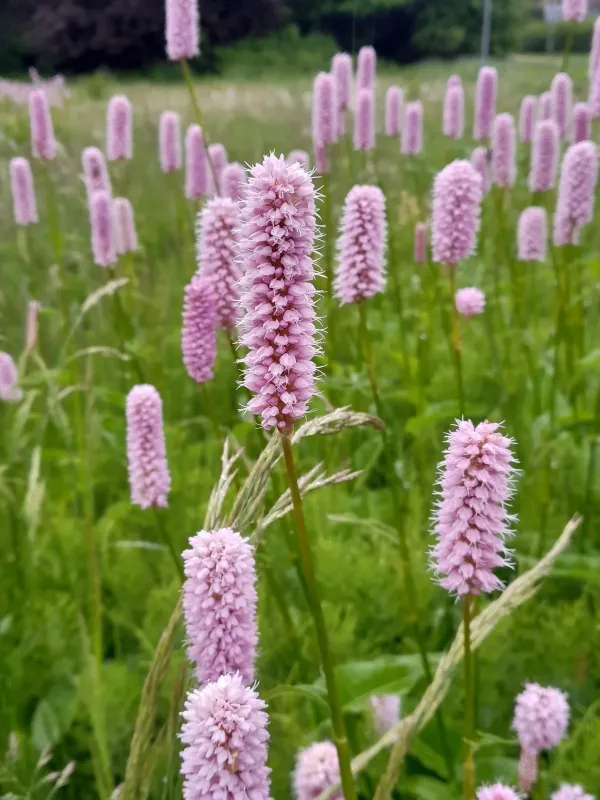
Description
Sowing dates
Bistorta officinalis, commonly known as common bistort or snakeweed, is a perennial herbaceous plant of the Polygonaceae family. It is typically propagated either by sowing seeds or through the division of mature rhizomes during the dormancy period.
Seed sowing is best performed in late autumn to allow for natural cold stratification over the winter, which significantly improves germination rates in the following spring. Seeds should be sown shallowly, about 1-2 centimeters deep.
For commercial cultivation, vegetative propagation using rhizome cuttings is preferred, as it ensures faster establishment of the field. Cuttings should be planted in rows with adequate spacing to allow for healthy rhizome expansion.
In the first year of establishment, the plant focuses on developing its basal leaf rosette and root system. Therefore, weed management is critical during this early growth stage to prevent competition.
Maintaining a clean field and proper row spacing (usually 45-60 centimeters) helps in maximizing the yield of the harvestable rhizomes over several productive years.
Growing requirements
This species thrives in moist, temperate environments. It is naturally found in meadows and riparian zones, making it an excellent candidate for cultivation in areas with consistent soil moisture.
The ideal soil for Bistorta officinalis is a rich, loamy, or organic-rich soil that retains water well. It prefers slightly acidic to neutral soil pH for optimal nutrient uptake.
As a hardy perennial, it exhibits excellent frost resistance and can withstand harsh winters, especially when protected by a consistent layer of snow in colder regions.
While the plant prefers full sun for vigorous growth, it can tolerate partial shade, making it versatile for different agricultural settings, including agroforestry or buffer zones.
Proper soil management, including the addition of compost or balanced organic fertilizers, promotes healthy rhizome development and enhances the medicinal quality of the final crop.
Main diseases and pests
High soil moisture combined with poor drainage can lead to root rot issues, which are the primary threat to the health of the rhizome harvest. Proper field drainage is therefore mandatory.
Fungal diseases like rust or powdery mildew may occasionally occur during humid, stagnant summers. Improving airflow through appropriate plant spacing is the best cultural control method.
Insects like leaf-eating caterpillars can sometimes affect the foliage, but rarely cause systemic damage to a well-established crop if monitored regularly.
Integrated pest management, including monitoring and biological control, is sufficient for most growers, preventing the need for heavy chemical applications on medicinal crops.
Strict hygiene in the field, such as removing infected plant debris, helps to break the cycle of pathogens and maintain a healthy stand for the duration of the crop's lifecycle.
Harvesting
The primary harvest target is the rhizome, which is best collected in the autumn after the above-ground biomass has begun to senesce. This timing ensures the highest concentrations of tannins.
Mechanical harvesting is typically used on larger scales, lifting the rhizomes carefully to avoid excessive damage, as the quality of the raw material depends on its integrity.
Post-harvest processing involves washing the rhizomes thoroughly to remove all soil and debris, followed by trimming any extraneous stem parts or thin root hairs.
Drying must be conducted in well-ventilated areas or controlled-temperature dehydrators at around 50-60 degrees Celsius to prevent spoilage and maintain phytochemical efficacy.
Properly dried rhizomes are brittle and exhibit a characteristic dark, astringent appearance on the inside, signaling that they are ready for storage or further processing.