
Berzelia squarrosa
Berzelia squarrosa
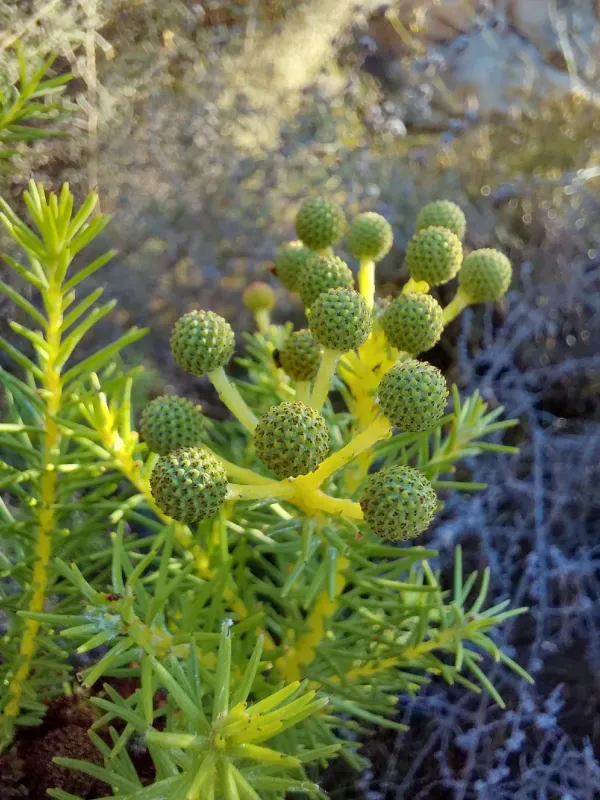
Description
Growing requirements
Berzelia squarrosa is an evergreen perennial shrub belonging to the Bruniaceae family. Originating from the Cape region of South Africa, this plant is naturally adapted to sandy and rocky soil compositions.
The plant requires high light intensity for optimal development. Due to its Mediterranean-like origin, it is highly sensitive to frost and is typically grown in greenhouses or as a container plant in temperate climates.
Well-draining, slightly acidic or neutral soil is essential for the health of Berzelia squarrosa. Waterlogging should be strictly avoided to prevent root system suffocation and decay.
Irrigation management is a crucial factor in the agrotechnology of this species. Water should be applied moderately, allowing the top layer of the substrate to dry out between watering sessions.
Stable climatic conditions with moderate humidity (around 50-60 percent) promote healthy foliage and abundant inflorescence development in a greenhouse environment.
Main diseases and pests
The most significant threats to Berzelia squarrosa include fungal diseases primarily caused by poor drainage and excessive atmospheric humidity in closed environments.
Pests such as spider mites and mealybugs can pose a threat, particularly if the plant is stressed by improper environmental conditions or poor air circulation.
Prevention relies on strict adherence to watering protocols and the maintenance of a well-ventilated growing space to discourage pest and mold establishment.
Integrated pest management strategies are recommended, as the plant can be sensitive to aggressive chemical treatments if dosages are not carefully monitored.
Regular monitoring and rapid isolation of any symptomatic plants are the most effective ways to maintain a healthy greenhouse population.
Harvesting
The primary economic use of Berzelia squarrosa is in the floral industry. Its unique spherical inflorescences are highly valued for their texture and long-lasting quality in cut flower arrangements.
Harvesting should be timed when the flower heads are fully mature but retain their vibrant texture. Careful harvesting supports the commercial viability of the plant as an exotic cut flower crop.
These stems are favored by florists for their ability to remain decorative for several weeks, providing a distinct architectural element in modern floral designs.
Post-harvest care involves a strategic pruning of the plant to encourage vegetative regrowth and to ensure future seasons of quality blooms.
Proper post-harvest conditioning, such as clean water maintenance and hydration additives, helps extend the vase life of the stems significantly.