
Berzelia albiflora
Berzelia albiflora
Description
Growing requirements
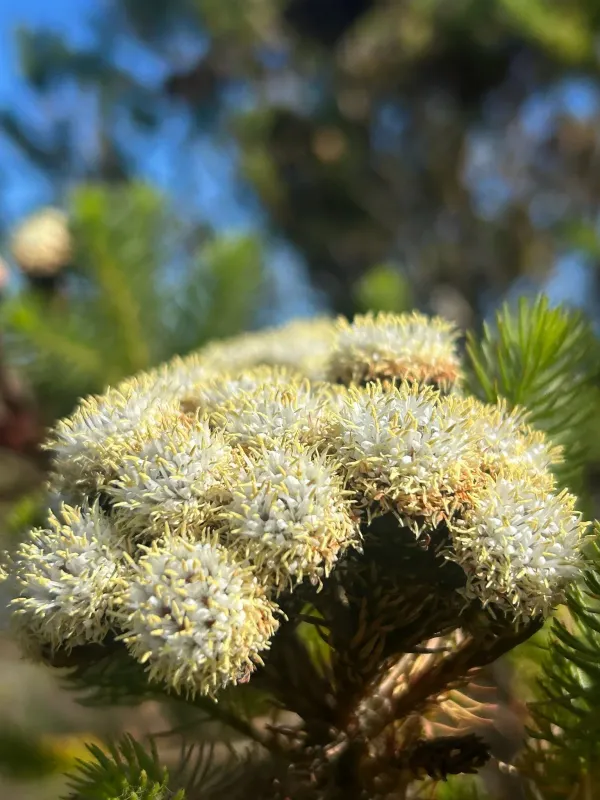
Berzelia albiflora is an evergreen shrub belonging to the Bruniaceae family, native to the Cape region of South Africa. Known for its distinct spherical, white, button-like inflorescences, this plant is a staple in high-end floral design and specialized landscaping.
Successful cultivation requires well-draining, acidic to neutral sandy soils. As a member of the fynbos vegetation, it is highly sensitive to root disturbance and waterlogging, making proper drainage design the most critical factor in its agronomic management.
The plant thrives in Mediterranean-like climates with moderate temperatures and high humidity levels. In regions with harsher conditions, it is best grown in greenhouses or protected containers to regulate the environmental parameters and protect the foliage from extreme stress.
Sunlight exposure should be bright but filtered. Intense direct midday sun can lead to scorching of the delicate leaves, while insufficient light levels will significantly reduce the density and quality of the flower heads during the blooming season.
Irrigation practices must be precise; the growing medium should be kept moist but never saturated. Using lime-free water is essential to maintain the preferred soil pH level and ensure the plant's nutrient uptake remains optimal throughout the growth cycle.
Harvesting
The primary economic value of Berzelia albiflora lies in its use as a cut flower. The inflorescences have an exceptional vase life, making them highly desirable for professional florists creating long-lasting arrangements and event decorations.
Harvesting is typically done when the flower heads are fully developed and pure white. Stems are cut using sterilized, sharp tools to ensure clean wounds and prevent the transmission of pathogens into the main plant structure.
Post-harvest handling involves immediately placing the stems in clean, cool water. Given its unique texture, the plant is frequently used in modern floral arrangements, providing a structural contrast to softer, more traditional flower types.
Management of the harvest involves cyclical pruning. After the main flowering flush, trimming the plants encourages bushy growth and improves the yield of high-quality stems in the subsequent growth season, ensuring long-term profitability for the producer.
Market demand for this species remains steady due to its exotic appeal. Sustainable harvesting methods and integrated pest management are crucial to maintain plant vigor and protect against common greenhouse stressors that can impact stem strength and bloom quality.