
Berzelia galpinii
Berzelia galpinii
Description
Sowing dates
Propagation of Berzelia galpinii is typically achieved through seeds or stem cuttings. Seeds possess a hard seed coat and require stratification in a humid environment to break dormancy and ensure successful germination.
Sowing should be performed in a controlled greenhouse environment, maintaining a steady temperature range between 18 and 20 degrees Celsius to foster optimal seedling development.
The growing medium must be lightweight, acidic, and well-draining, consisting of a mix of sand and peat. Maintaining consistent soil moisture without waterlogging is vital for the survival of emerging seedlings.
Stem cuttings are collected in late summer from semi-hardwood growth. The use of rooting hormones combined with high ambient humidity and bottom heat significantly improves the success rate of propagation.
Young plants should be transplanted only when the root system is sufficiently robust, usually allowing for a growth period of at least 12 to 18 months before moving to a permanent container or field location.
Growing requirements
A member of the Bruniaceae family, Berzelia galpinii is endemic to South Africa. It thrives in well-lit areas but requires protection from intense midday sun in hotter climates to prevent leaf scorch.
Soil requirements are strict: the substrate must be acidic, low in nutrients, and have excellent permeability. The plant is highly sensitive to moisture accumulation, which can cause rapid root decay.
The climate must be moderate; Berzelia galpinii does not tolerate freezing temperatures. In regions outside its natural habitat, it is primarily grown as a container plant that must be moved indoors during winter.
Humidity levels should be kept moderate. Watering should be conducted when the top layer of the substrate is dry to the touch, and it is crucial to avoid getting the flower heads wet to prevent rot.
Fertilization must be approached with caution, utilizing specialized low-phosphorus fertilizers, as the plant is adapted to nutrient-poor soils and can be easily damaged by excessive nitrogen or minerals.
Yield
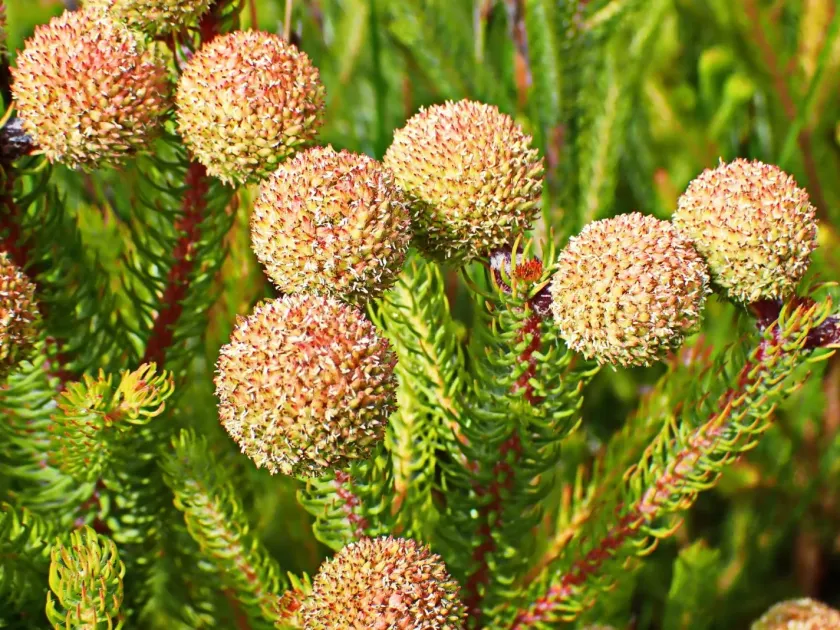
Berzelia galpinii is primarily cultivated for the floricultural industry. Its dense, ball-shaped inflorescences are highly sought after by designers for their unique texture and silver-green appearance.
The yield of marketable stems varies based on the bush's age and pruning practices. A healthy, mature plant can produce between 30 and 50 stems per season, making it a viable commercial crop.
The cut flowers are known for their exceptional vase life, contributing to their high value in the export market. Proper post-harvest treatment ensures they remain fresh for weeks.
Grading is based on the length of the stems and the uniformity of the flower heads. High-quality production requires careful management of the plant's vegetative cycle and consistent maintenance.
Regular rejuvenation pruning is essential to maintain high production levels, as it stimulates new growth and prevents the plant from becoming woody and unproductive at its base.
Main diseases and pests
Root rot caused by overwatering and poor drainage is the most significant threat to Berzelia galpinii. Prevention includes strict adherence to irrigation schedules and the use of fungicide treatments when necessary.
Common pests include spider mites and scale insects, which often thrive in the dry conditions of greenhouse environments. Early detection and systemic insecticide applications are standard management practices.
Chlorosis is a frequent issue, often signaling an incorrect pH level in the soil or a deficiency in essential micronutrients, requiring careful monitoring and adjustments to the growing substrate.
Mechanical damage to the roots during repotting often leads to pathogenic fungal infections, so all transplanting should be done using the transfer method to protect the root ball's integrity.
Proper air circulation is critical to prevent the development of powdery mildew and other foliar diseases that can ruin the appearance of the stems before harvest.
Harvesting
Harvesting takes place when the ball-shaped inflorescences reach their peak density and display the desired color. Cutting too early leads to wilting, while delaying harvest can result in a loss of quality.
Professional, disinfected shears must be used to make an angled cut on the stem, which aids in water uptake and reduces the chance of introducing pathogens into the remaining plant.
Stems must be placed immediately into clean water and kept in a cool storage facility (4–6 degrees Celsius) to slow down metabolic processes and maintain freshness.
Transport packaging must be designed to protect the fragile flower heads from physical pressure, ensuring that the visual appeal of the product remains intact until it reaches the end customer.
The shelf life of the harvested crop can extend up to three weeks if maintained at the correct temperature and treated with appropriate floral preservatives.