
Berzelia intermedia
Berzelia intermedia
Description
Growing requirements
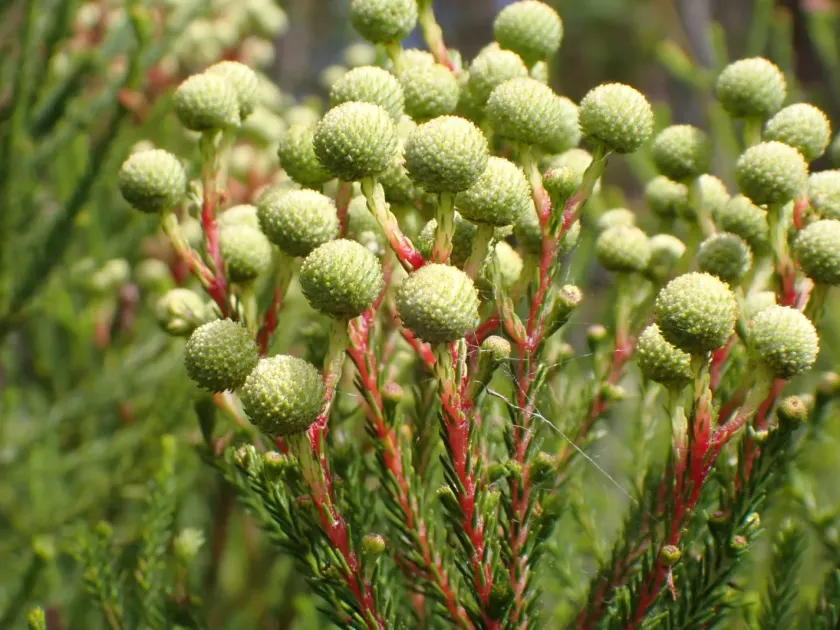
Berzelia intermedia is a fascinating evergreen shrub belonging to the Bruniaceae family. Native to the Cape region of South Africa, it is widely recognized for its unique, globular flower heads which serve as a premium product in the global floral trade.
This species thrives in Mediterranean-like climates and requires plenty of bright, indirect sunlight to maintain its compact growth habit. It is highly sensitive to frost, making it suitable primarily for greenhouse production in temperate regions.
The ideal growing medium must be acidic or neutral and possess excellent drainage properties. A mix containing peat, perlite, and pine bark is often recommended to prevent waterlogging, which the roots cannot tolerate.
Temperature management is critical for the development of healthy inflorescences. The crop prefers temperatures ranging between 18°C and 25°C. Excessive heat during the flowering phase should be avoided to ensure the longevity of the blooms.
Agronomic maintenance includes regular, moderate irrigation with soft water. Fertigation should be carefully managed, focusing on a low-phosphorus nutrient regime to prevent stress and promote optimal structural development of the shoots.
Main diseases and pests
Root rot, primarily caused by Pythium or Phytophthora species, is the most significant disease threatening Berzelia crops. Prevention relies on sterile substrate use, proper pot sanitation, and strict irrigation management.
Spider mites (Tetranychidae) and mealybugs are the most common pests found in indoor cultivation. These insects thrive in dry conditions and can cause significant foliage damage if not controlled by timely application of acaricides.
Nutritional deficiencies, specifically chlorosis linked to iron or magnesium unavailability, can weaken the plant's natural defense systems. Periodic leaf analysis and the use of chelated micronutrients are standard professional practices.
Poor ventilation within the crop canopy creates a microclimate prone to fungal diseases like botrytis. To mitigate this, growers should maintain adequate spacing between plants to ensure constant airflow and moisture regulation.
Integrated pest management (IPM) strategies, including the use of beneficial insects and biological fungicides, are increasingly preferred over chemical interventions to maintain the safety and sustainability of the cut flower production.
Harvesting
The primary use of Berzelia intermedia is in the professional cut flower market. It is prized for its high ornamental value, structural beauty, and long vase life, making it a staple for floral designers worldwide.
Harvesting is performed by carefully selecting stems with fully developed, firm, and globular flower heads. The timing is crucial; the stems must be cut early in the morning to ensure optimal turgor pressure before they are placed in hydration buckets.
Post-harvest care involves keeping the stems in clean water at cool temperatures, typically around 4°C to 6°C. This practice effectively slows down the maturation process and maintains the freshness of the product for shipment.
Grading standards are based on stem length, head diameter, and foliage health. High-quality stems are categorized and bunched, reflecting the demand for uniform, high-value decorative elements in modern floristry.
Proper storage prevents the dehydration of the needle-like leaves, which are as commercially significant as the flowers themselves. Maintaining a high-humidity environment during transit is essential for preserving the plant's overall aesthetic quality.