
Barringtonia racemosa
Barringtonia racemosa
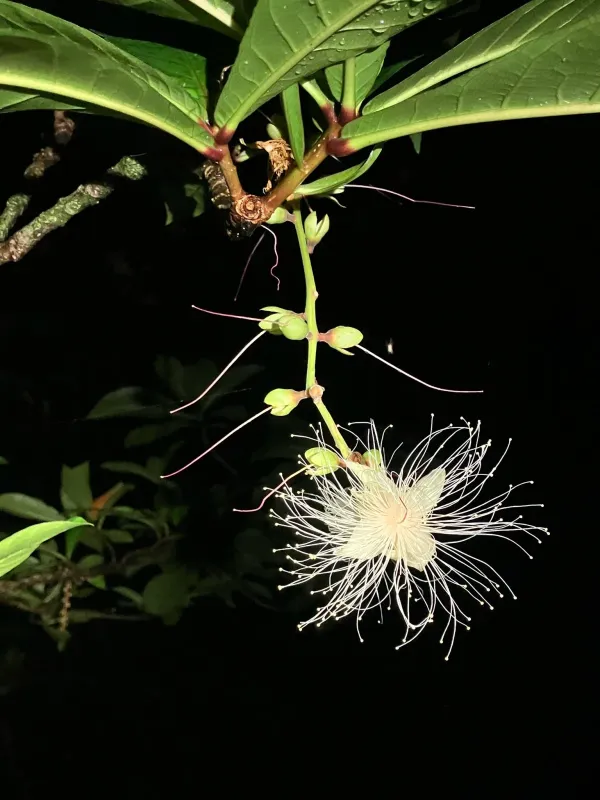
Description
Sowing dates
Propagation of Barringtonia racemosa in cultivation is primarily achieved through seeds, which possess a remarkable buoyancy allowing them to disperse via water. Freshly harvested fruits should be sown in moist substrate immediately after ripening, as they lose viability quickly when kept in dry conditions.
The optimal time for sowing is the beginning of the rainy season, when natural humidity and soil moisture reach their peak. In nursery conditions, seeds are placed in containers with loose, well-draining soil mixtures at a depth of 2–3 cm.
Germination takes approximately three to six weeks, depending on ambient temperatures. Maintaining a constant temperature range of 25–30 degrees Celsius is essential to stimulate vigorous root system development.
Once the first true leaves emerge, seedlings require careful transplanting. The species is sensitive to root disturbance, so moving them to a permanent site should be done carefully to preserve the soil ball around the roots.
When planting in open ground, ensure a spacing of at least 5–7 meters between individual trees. This accounts for the broad, spreading canopy of the mature plant and provides enough space for optimal growth.
Growing requirements
Barringtonia racemosa, a member of the Lecythidaceae family, is a characteristic species of tropical coastal flora. This evergreen tree prefers wet, swampy locations and is frequently found along riverbanks and within mangrove ecosystems.
The species exhibits high salinity tolerance, making it an excellent candidate for the restoration of coastal zones subject to seawater influence. It is naturally adapted to withstand prolonged periods of root submersion.
For successful growth, it requires fertile, humus-rich soils with acidic or neutral pH levels. It is vital to provide protection from strong winds, which can damage the large, leathery leaves of the tree during its juvenile growth stages.
This crop is strictly tropical and cannot tolerate even brief exposure to freezing temperatures. The ideal temperature range for vegetative growth is between 20 and 35 degrees Celsius throughout the year.
Light is a critical growth factor. While Barringtonia racemosa thrives in open areas with direct solar exposure, young saplings can tolerate partial side shade provided by taller, more mature vegetation.
Yield
The economic value of Barringtonia racemosa extends beyond timber production to include the medicinal and chemical properties of its various parts. Yield levels for fruits and seeds depend heavily on the age of the tree and its environmental conditions.
Mature trees typically begin to fruit significantly between 5 and 8 years of age. In favorable environments, a single tree can produce dozens of kilograms of fruit annually, which are collected for the extraction of valuable pharmacological compounds.
The timber of this tree is characterized by moderate density and is utilized in local construction for small watercraft and woodwork. Its primary advantage is its inherent resistance to moisture-related decay.
The bark and roots contain saponins, which are used in the production of botanical insecticides. Harvesting these materials is performed sustainably, using moderate pruning methods that maintain the long-term health and vitality of the parent tree.
The species is also highly valued for landscaping in tropical regions, where its showy, long, pendulous racemes of flowers attract nocturnal pollinators and provide a unique aesthetic appeal to park environments.
Main diseases and pests
The primary threats to Barringtonia racemosa include fungal diseases of the root system, which are often triggered by poor agricultural practices and water stagnation in the absence of natural drainage.
Common pests include leaf-eating insects and aphids, which can significantly reduce the photosynthetic capacity of young saplings during their most active growth periods.
Caterpillar infestations can lead to complete defoliation, which weakens the plant and increases its susceptibility to secondary opportunistic infections. Biological control methods are highly recommended for managing these outbreaks.
High humidity conditions may facilitate the development of powdery mildew on young shoots, requiring proactive management through the application of specialized, environmentally safe fungicides.
Pest control should be carried out systematically. The use of oil-based botanical insecticides is the preferred protection strategy, as it ensures the preservation of the plantation's ecological balance.