
Barringtonia pendula
Barringtonia pendula
Description
Growing requirements
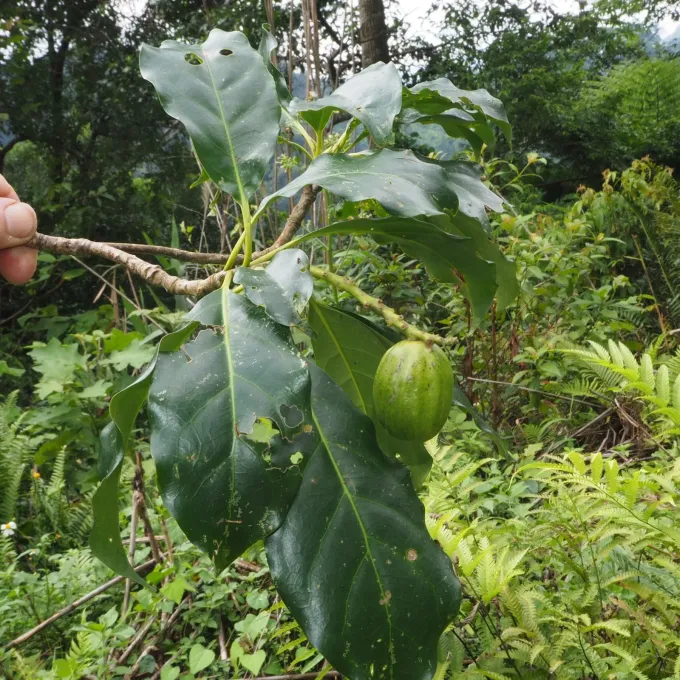
Barringtonia pendula is a significant species belonging to the Lecythidaceae family, native to the lush tropical regions of Southeast Asia. This evergreen tree is highly valued for its dense foliage and distinct reproductive structures that hang in elongated, pendulous racemes, which provide its characteristic name.
The cultivation of this species strictly requires a tropical climatic environment. It thrives best in regions that experience minimal seasonal temperature variation, consistently maintaining warmth above 20 degrees Celsius. Exposure to frost is lethal to the tree's vascular system, making it suitable only for specific latitudes.
Soil requirements for Barringtonia pendula emphasize deep, nutrient-rich, and well-drained loams. The tree performs exceptionally well in regions with high precipitation levels, as it is evolutionarily adapted to high soil moisture content and frequently occurring humidity, typical of riparian or swampy habitats.
Agricultural management involves routine monitoring of nutrient levels, specifically ensuring that organic matter remains integrated into the topsoil layers. As the tree matures into a large canopy specimen, structural management and pruning are necessary to maintain wind resistance and improve light penetration through the inner branches.
For large-scale cultivation, irrigation management is the primary operational task. While the tree is drought-tolerant once fully established, juvenile plants require consistent hydration to develop a robust root system. Proper spacing must also be considered to prevent competition between canopies in forest plantation settings.