
Barringtonia edulis
Barringtonia edulis
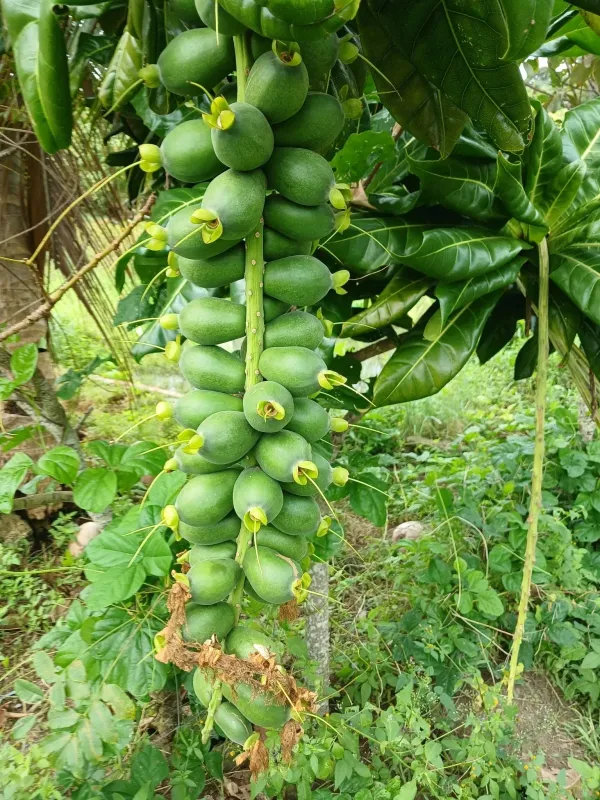
Description
Sowing dates
Propagation of Barringtonia edulis is primarily achieved through seeds. Fresh seeds exhibit high germination vigor; however, their viability decreases significantly if stored for extended periods outside of a moist environment.
For successful sowing, it is recommended to use an organic-rich substrate with excellent drainage. Seeds should be planted at a depth corresponding to the size of the fruit, maintaining consistent soil moisture and temperatures between 25 and 28 degrees Celsius.
Initial seedlings typically emerge within a few weeks of planting. Young plants require partial shade during their first months to prevent intense direct sunlight from scorching their delicate leaves.
The optimal time for transplanting seedlings to their permanent location is the beginning of the rainy season. This allows the root system to establish itself before the onset of the drier months, which is critical for the survival of young trees.
In commercial orchards, maintaining a planting distance of at least 8-10 meters is essential to accommodate future canopy growth and ensure sufficient airflow throughout the orchard.
Growing requirements
Barringtonia edulis, belonging to the Lecythidaceae family, is a native of the humid tropics, naturally distributed throughout Melanesia, including Vanuatu and the Solomon Islands.
The plant has strict requirements regarding air humidity and rainfall. It thrives in lowland tropical forests where annual rainfall consistently exceeds 2000 mm, making it well-suited to humid tropical climates.
Soil preferences include fertile, loamy, or alluvial soils with a neutral to slightly acidic pH. Despite its need for water, the tree does not tolerate waterlogging or saline soil conditions.
The ideal temperature range for stable growth is between 22 and 32 degrees Celsius. As a strictly tropical species, it cannot survive even brief periods of frost, which would be fatal to the tree.
Placing orchards in areas protected from strong winds is highly beneficial, as it helps preserve the large, sensitive leaves and prevents the premature shedding of fruit, thereby maximizing yields.
Yield
The yield of Barringtonia edulis depends heavily on the age of the tree and the quality of agricultural management. Mature specimens are capable of producing substantial quantities of fruit annually.
The fruits are large, fleshy drupes containing nutritious seeds. Since ripening occurs unevenly throughout the tree, harvesting often requires multiple visits to the orchard over an extended season.
The economic value lies in the seeds, which are consumed after heat treatment. They possess a nutty flavor and are a significant source of protein and essential fats for local communities.
In addition to the seeds, certain parts of the tree are utilized in traditional local practices, reinforcing the crop's multipurpose role within its native range.
The species is frequently integrated into agroforestry systems, growing alongside other fruit trees to efficiently utilize space and ensure a diverse and stable income for farmers.
Main diseases and pests
The primary threats to Barringtonia edulis plantations are fungal diseases that proliferate in high-humidity conditions. Leaf infections can significantly reduce the photosynthetic capacity of the tree.
Various species of scale insects and caterpillars represent common pests that damage young shoots and buds. Regular phytosanitary monitoring is essential for the early detection and management of pest outbreaks.
Pest control in tropical settings relies on integrated management practices, emphasizing the preservation of natural predators and minimizing the use of broad-spectrum synthetic pesticides.
Mechanical damage to the bark during pruning or maintenance can create entry points for pathogens. Consequently, using clean tools and exercising caution during farm operations is vital to tree health.
Disease prevention is largely achieved by ensuring optimal planting density, regular pruning to maintain canopy ventilation, and the prompt removal of infected branches.
Harvesting
Harvesting Barringtonia fruit requires care, as the heavy fruits can easily be damaged upon impact with the ground. Manual harvesting directly from the branches is the preferred method for maintaining quality.
Ripeness is determined by changes in the skin color of the fruit and the ease with which it detaches from the pedicel. Progressive ripening allows for a steady harvesting schedule.
Post-harvest, the fruits require immediate processing to prevent rapid decay due to their high moisture content. The first step involves extracting the seeds from the fleshy fruit pulp.
Processing the seeds involves roasting or boiling, which is necessary to improve taste and neutralize any potentially harmful compounds present in the raw state, making them safe for consumption.
Properly processed and dried seeds have a long shelf life, serving as an important high-energy food source and a valuable commodity in regional markets.