
Barringtonia asiatica
Barringtonia asiatica
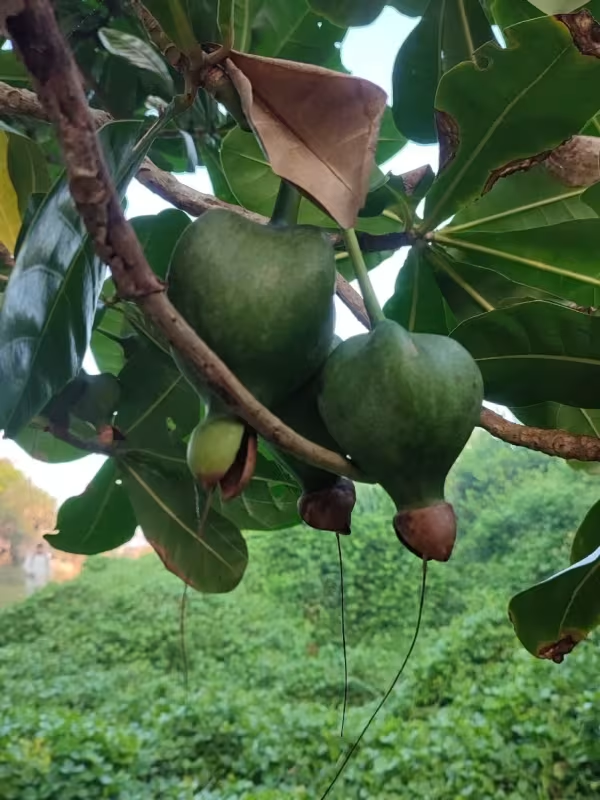
Description
Growing requirements
Barringtonia asiatica, commonly known as the sea poison tree, belongs to the family Lecythidaceae. It is a striking evergreen tree species that plays a significant role in coastal ecosystem maintenance across the tropical regions of the Indian and Pacific Oceans.
The botanical profile of the tree is characterized by large, obovate leaves and distinctive showy flowers with numerous white-pink stamens. These flowers are nocturnal, primarily pollinated by bats and moths, which is a specific adaptation to its native tropical habitat.
Environmentally, the tree thrives in sandy, well-draining soils and is exceptionally salt-tolerant. It requires a humid climate with consistent high temperatures throughout the year. It does not tolerate frost, making it suitable only for strictly tropical or warm subtropical regions.
Cultivation practices focus on providing enough space for the wide canopy to develop. It is often planted as an ornamental or a windbreak in coastal landscapes. Irrigation should be managed to mimic natural rainfall patterns, preventing waterlogging while ensuring root moisture.
The fruit of the tree is fibrous and buoyant, designed for sea dispersal. While parts of the plant contain saponins used historically as a traditional fish stupefacient, the plant itself is primarily valued today for its aesthetic contribution to coastal reforestation projects.
Main diseases and pests
Common biological threats include leaf-eating caterpillars and various sap-sucking insects such as aphids. While the plant is highly resilient in its natural environment, it can be susceptible to fungal infections if planted in areas with poor drainage and high humidity.