
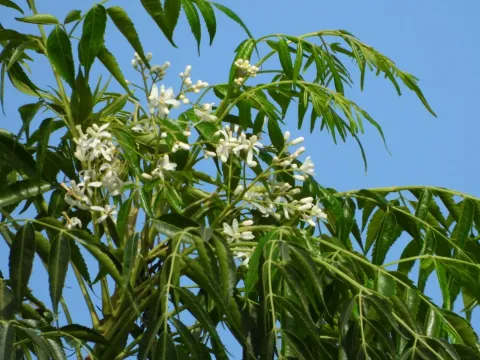
Neem
Azadirachta
Neem (Azadirachta indica) is a significant tropical evergreen tree belonging to the Meliaceae family. Renowned for its medicinal and insecticidal properties, it can reach heights of up to 30 meters.
What the section contains

Neem
The species originated in the Indian subcontinent and is now extensively cultivated across tropical and subtropical regions of Southeast Asia, Africa, and parts of the Americas.
Azadirachta indica is highly valued for its ability to thrive in poor soil conditions. It is remarkably drought-tolerant and can grow in stony, sandy, or alkaline soils where other crops often fail.
The tree requires a tropical climate with high temperatures throughout the year. It demands abundant sunlight and is strictly sensitive to frost, which limits its commercial production to specific climatic zones.
Economically, the neem tree is a vital resource. Its seeds are processed to extract neem oil, which serves as a potent biopesticide, while the wood is highly durable and resistant to termite attacks.
Although robust, neem trees are susceptible to fungal infections such as powdery mildew in humid environments. Proper site selection and soil drainage are essential to prevent root rot in young plantations.
Insect pests such as leaf-eating caterpillars and aphids may affect saplings. However, the mature tree possesses systemic resistance due to the presence of azadirachtin, which naturally repels various agricultural pests.