
Avicennia officinalis
Avicennia officinalis
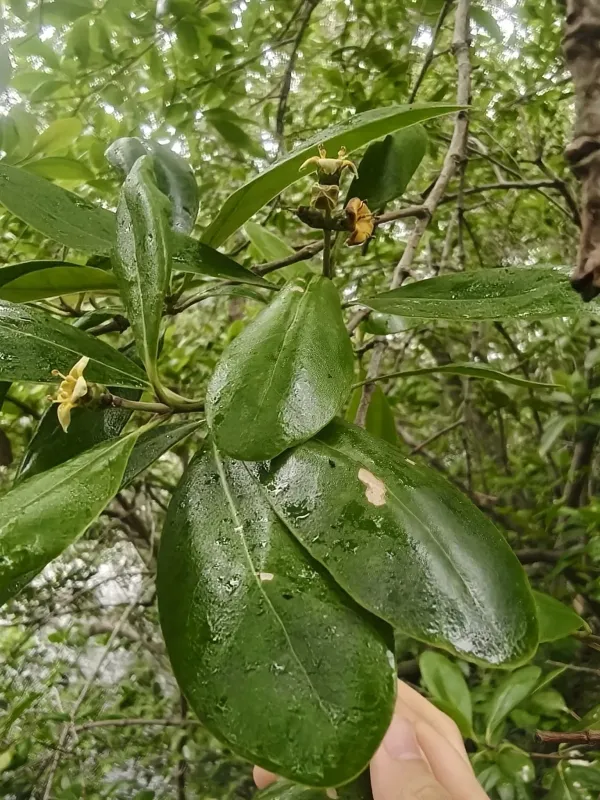
Description
Growing requirements
Avicennia officinalis, commonly known as the Indian mangrove, belongs to the family Acanthaceae. It is a dominant tree species native to the tidal regions of tropical Asia, where it thrives in intertidal zones characterized by fluctuating salinity levels and submerged root environments.
The plant exhibits remarkable physiological adaptations, most notably the development of pneumatophores. These vertical root structures extend above the water surface to facilitate oxygen uptake in the oxygen-depleted, waterlogged sediment where the tree is rooted.
This species requires high ambient temperatures and does not tolerate freezing conditions. It typically grows in sheltered estuaries, lagoons, and coastal deltas where nutrient-rich silt accumulates and tidal flushing provides necessary oxygenation and mineral distribution.
The salt-excreting mechanism in the leaves is essential for its survival in brackish water. By maintaining osmotic balance, the plant is able to successfully colonize environments that would be lethal to most other woody plant species, thereby serving as a pioneer in land reclamation.
Economically, Avicennia officinalis is valued for its bark, which contains tannins used in tanning leather and various traditional medicines. The dense wood is occasionally utilized for timber, though the primary value of the species lies in its contribution to coastal protection and biodiversity.
Main diseases and pests
Habitat destruction due to aquaculture development, particularly shrimp farming, poses the most significant threat to wild populations, leading to severe coastal erosion and loss of essential nursery grounds for marine species.
Pollution from agricultural runoff and industrial waste causes physiological stress in mangroves, making them susceptible to wood-boring insects and fungal pathogens that can lead to large-scale diebacks if the environmental conditions remain poor.