
Black mangrove
Avicennia germinans
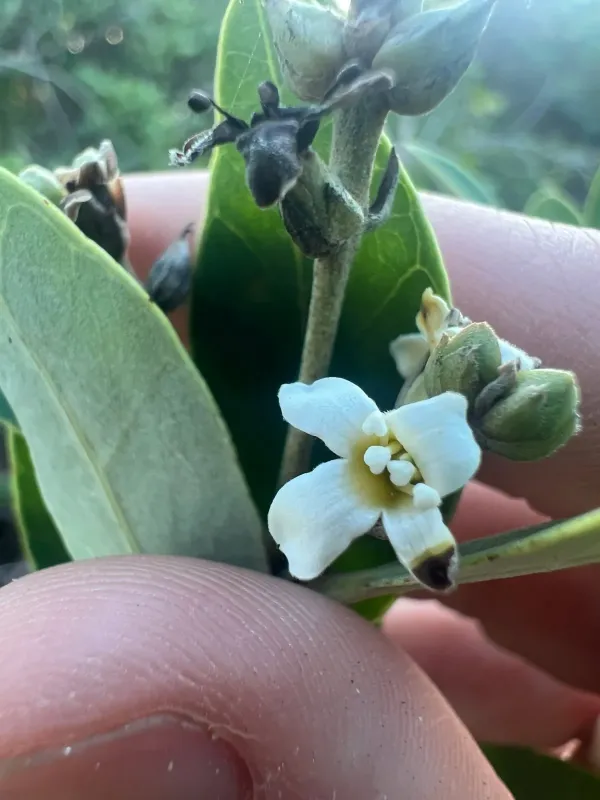
Description
Growing requirements
Black mangrove (Avicennia germinans) is a species belonging to the Acanthaceae family. It is a tree adapted to thrive in tropical and subtropical coastal areas, playing a vital role in intertidal estuarine ecosystems around the world.
The species is native to the Atlantic and Pacific coasts of the Americas and the western coast of Africa. It naturally inhabits muddy and sandy sediments in tidal zones where it can withstand regular immersion by seawater.
A distinctive botanical characteristic of this culture is the development of pneumatophores — specialized aerial roots that grow vertically from the sediment to facilitate gas exchange in oxygen-poor, waterlogged soils.
The plant demonstrates remarkable salinity tolerance thanks to specialized salt-secreting glands on its leaves. This physiological mechanism allows the mangrove to expel excess salt and maintain internal osmotic equilibrium.
Black mangrove serves as a primary coastal protection crop. Its dense root network stabilizes shorelines, significantly reducing soil erosion and providing a biological shield against storm surges and wave energy.
Main diseases and pests
The primary threat to the black mangrove is oil pollution in coastal waters. Hydrocarbons can physically coat and clog the pneumatophores, effectively suffocating the tree by preventing necessary root aeration.
Pathogens affecting the species often stem from environmental stress, such as extreme salinity fluctuations or human-induced pollution, which weaken the trees and make them susceptible to fungal infections.
Pests, including various wood-boring insects and mollusks, can cause damage to younger or stressed trees, though these populations are usually kept in check by natural predatory systems within the ecosystem.
Climate change and rising sea levels pose long-term risks to the species. If the rate of sea-level rise exceeds the rate of sedimentation, mangroves may become permanently submerged and eventually die.
Professional management requires constant water quality monitoring and invasive species control. Protecting the integrity of the coastal soil and sediment is essential for the long-term viability of black mangrove stands.
Harvesting
Economically, the black mangrove is valued for its dense, durable wood, which is resistant to decay. It is traditionally used in construction and the manufacturing of high-quality charcoal for local energy needs.
The plant finds applications in herbal medicine and the cosmetic industry, utilizing extracts from its bark and leaves, which are rich in tannins and various beneficial secondary metabolites.
Mangrove flowers are a significant resource for apiculture. Black mangrove honey is highly regarded for its distinct flavor profile and perceived antiseptic properties, representing a sustainable product of the mangrove forest.
In conservation forestry, the species is cultivated for reforestation. Its seeds exhibit vivipary, meaning they germinate while still attached to the parent tree, increasing survival rates when they drop into the tidal zones.
Sustainable harvesting of biomass is strictly managed under regional environmental regulations to maintain ecosystem health. Properly maintained mangroves offer a renewable resource base without compromising biodiversity.