
Grey mangrove
Avicennia marina
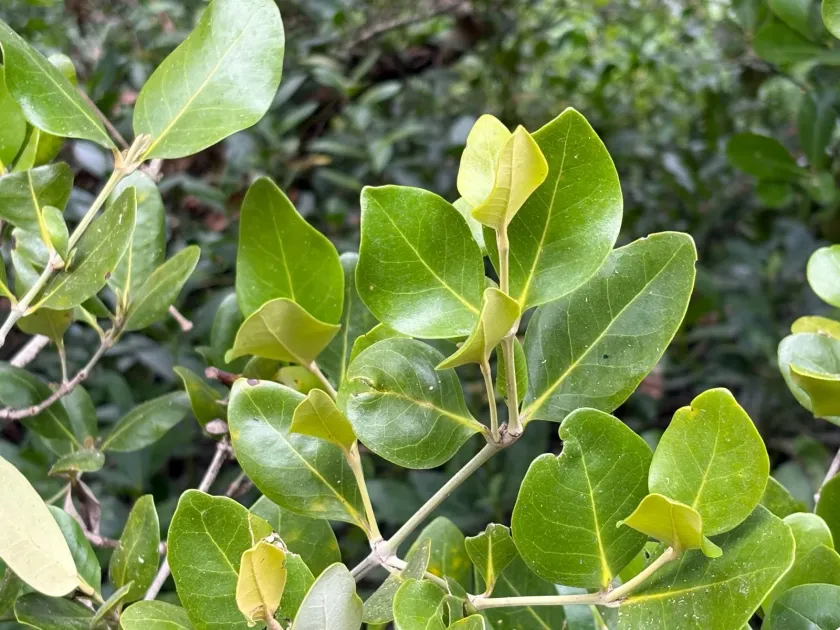
Description
Sowing dates
Propagation of the grey mangrove primarily occurs through viviparous seeds that begin germinating while still attached to the parent tree, ensuring immediate establishment upon release.
Seeds are harvested at the peak of maturity when the fruit coat starts splitting, and they must be planted immediately into the muddy substrate to maintain high viability.
In large-scale restoration projects, direct seeding into the intertidal zone is the preferred method, where the seeds quickly develop taproots to anchor into the sediment.
The optimal planting window corresponds with the wet season, as increased freshwater runoff helps lower local salinity, favoring the survival of tender seedlings.
Using nursery-grown seedlings with developed root systems is recommended in high-energy coastal zones to ensure better survival against tidal currents and wave action.
Growing requirements
As a halophyte, the grey mangrove is exceptionally adapted to high salinity environments where conventional crops would fail due to osmotic stress.
The plant thrives in nutrient-rich muddy or sandy soils, which are characteristic of tidal flats and require adequate organic matter content for healthy growth.
Key botanical features include pneumatophores, or specialized air-breathing roots, which allow the plant to obtain oxygen despite being submerged in waterlogged, anaerobic soil.
Grey mangroves require a warm tropical or subtropical climate and are highly sensitive to frost, which can cause severe damage to the vascular tissues of young trees.
Abundant sunlight is essential for maintaining high rates of photosynthesis, which supports the energy-demanding processes of salt excretion and rapid biomass accumulation.
Yield
The grey mangrove provides durable, decay-resistant timber traditionally used for boat building, fencing, and fuel, provided that harvesting follows strict ecological guidelines.
It is a vital nectar source for bees, resulting in the production of unique mangrove honey, which is highly valued for its distinct medicinal properties and flavor profile.
The biomass produced by the mangrove contributes significantly to the food web, supporting local aquaculture industries by providing nursery grounds for shrimp, crabs, and fish.
In modern ecological management, these forests are increasingly recognized for their carbon sequestration potential, providing economic value through carbon credit programs.
Under controlled conditions, nurseries can achieve rapid seedling growth, with plants reaching over one meter in height within their first two years of development.
Main diseases and pests
Fungal infections of the bark and pneumatophores represent a significant threat, often exacerbated by industrial water pollution and heavy metal accumulation.
Various defoliating insects, including specialized moth larvae, can cause substantial damage to the canopy, reducing the overall photosynthetic capacity of the stand.
Human activities, such as water diversion and coastal development, can lead to hyper-saline conditions, making the trees susceptible to physiological decline and secondary pests.
Small crustaceans like fiddler crabs can predate on newly fallen seeds, necessitating protective measures such as mesh enclosures during the early establishment phase.
Climate change-induced sea-level rise poses a long-term risk of permanent inundation of the root system, which can lead to the suffocation and death of mangrove stands.