
Asystasia schimperi
Asystasia schimperii
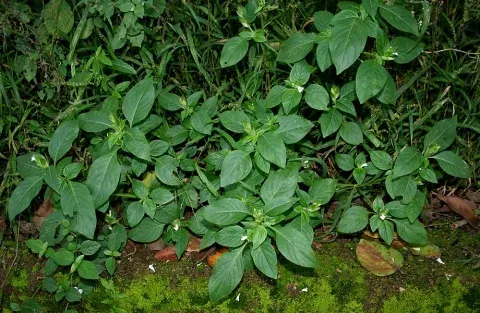
Description
Sowing dates
Asystasia schimperi is a perennial herbaceous plant belonging to the Acanthaceae family. It is widely recognized in its native African range as a robust and adaptable species capable of colonizing various habitats.
In agricultural settings, sowing is typically timed to coincide with the onset of the rainy season. This ensures that the seeds have optimal soil moisture and temperature conditions for germination and early establishment.
Seeds should be planted at a shallow depth of approximately 1 to 2 centimeters. Maintaining appropriate plant density is crucial to ensure rapid ground cover, which helps suppress weeds during the initial stages of growth.
The plant demonstrates vigorous growth and high regenerative capacity, allowing for a quick uniform stand after emergence. Proper site preparation, including tilling, is recommended to ensure optimal contact between the seed and soil.
Farmers often utilize direct seeding methods for large-scale production. Success depends heavily on the quality of the seeds and the consistency of rainfall shortly after planting.
Growing requirements
Asystasia schimperi thrives in tropical climates where temperatures remain consistently high. It requires a warm environment and is highly sensitive to cold spells, making it unsuitable for areas with frost.
The soil requirements for this crop include good drainage and high fertility. While the plant can tolerate various soil types, loamy soils rich in organic matter provide the best conditions for biomass production.
Water management is a critical aspect of its cultivation. Although the species shows moderate drought tolerance, sustained high yields require regular moisture levels during the peak growing season.
Light availability significantly influences the growth rate. While the plant can survive in partial shade, it achieves the most efficient photosynthetic activity and maximum biomass in full sun conditions.
Good agricultural practices, such as incorporating compost or balanced nitrogen fertilizers, are essential to maintain soil productivity and support the crop's long-term health in continuous planting systems.
Yield
Asystasia schimperi is primarily cultivated for its use as a nutritious forage crop for livestock. Its leaves and tender stems provide a valuable source of protein and essential minerals for cattle and small ruminants.
The total yield is largely dependent on the frequency of harvesting. Under favorable management, the crop can be cut multiple times per season, providing a steady supply of fresh fodder for local farm operations.
Its ability to recover quickly after grazing or cutting makes it a preferred option for intensive forage production. This trait allows for high land-use efficiency in regions where pasture space is limited.
Harvesting should be done before the plant fully matures and sets seed to maintain the highest nutritional quality. Overly mature plants tend to become fibrous and less palatable to livestock.
Integration into rotational grazing schemes can enhance the sustainable use of the crop. Proper management prevents soil depletion and ensures that the forage stands remain productive for several harvest cycles.
Main diseases and pests
Pathogenic fungi, particularly those thriving in high-humidity conditions, are the primary biological threat to this crop. Leaf spot diseases can lead to significant biomass loss if the planting density is too high.
Pests such as aphids and various larvae frequently target the succulent parts of the plant. Monitoring and timely intervention using integrated pest management strategies are crucial to minimize losses.
Soil-borne nematodes can pose a risk in areas where the crop is grown continuously without rotation. Maintaining soil health and using fallow periods can effectively mitigate this risk to the root system.
During the flowering stage, the plant may become more susceptible to sucking insects. Close observation during this sensitive phase is recommended to prevent widespread infestations that could impact overall yield.
Maintaining clean farm equipment and removing crop residues from infected areas can help prevent the spread of diseases. A proactive approach to plant health is the key to successful long-term cultivation.