
Asystasia intrusa
Asystasia intrusa
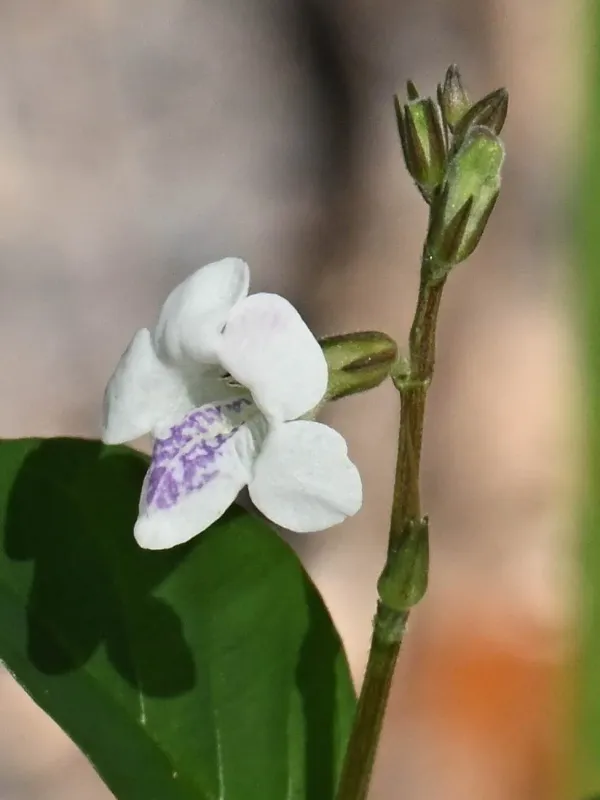
Description
Growing requirements
Asystasia intrusa, a member of the Acanthaceae family, is a perennial herb known for its robust growth and rapid expansion in tropical environments.
The plant thrives in warm, humid climates and prefers well-drained soils rich in organic matter. It exhibits significant adaptability to various soil types, from sandy loams to heavier clay-based soils.
Botanically, it features simple, opposite leaves and stems that readily root at the nodes when touching moist soil, facilitating rapid vegetative propagation across the field.
Optimal growth occurs under full sunlight, although the plant displays a remarkable capacity to persist in partial shade conditions, making it common in agroforestry settings.
Temperature requirements are high, with the plant performing best in the 25°C to 32°C range, making it unsuitable for regions experiencing frost or prolonged cool spells.
Yield
In agricultural settings, Asystasia intrusa is recognized primarily as a high-quality forage plant for ruminants, including cattle and goats.
The nutritional profile of the biomass, particularly the protein content, makes it a valuable feed supplement, helping to improve livestock health and weight gain.
Yield potential is remarkably high due to its aggressive growth habit; the plant can support multiple harvests or grazing rotations throughout the year.
Farmers often manage this plant as a component of permanent pastures, where it provides a consistent supply of green matter even during periods when other grasses might decline.
Effective management strategies, such as controlled grazing and periodic mowing, are essential to maintain the quality of the biomass and prevent the plant from becoming overly dominant.
Main diseases and pests
Despite its hardy nature, Asystasia intrusa can be susceptible to various fungal pathogens that thrive in high-humidity tropical conditions.
Leaf spots and minor infestations of sap-sucking insects are periodically reported, but these rarely cause significant economic damage to the overall stand.
The primary concern for growers is its invasive potential; if left unmanaged, it can quickly outcompete other essential crops in nearby fields.
Cultural control remains the most effective strategy, involving rigorous mowing schedules to prevent the plant from flowering and setting seed, which limits its spread.
Chemical control via selective herbicides is an option for perimeter management, ensuring that the plant remains contained within designated forage zones only.