
Asystasia scandens
Asystasia scandens
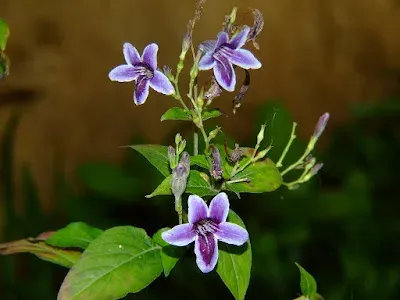
Description
Growing requirements
Asystasia scandens is a perennial herbaceous plant belonging to the Acanthaceae family. Known for its climbing or trailing habit, this species acts as a vigorous grower in tropical environments where it can cover large surface areas effectively.
Originating from the tropical regions of West and Central Africa, the plant has adapted to survive in various habitats including forest edges, riverbanks, and secondary growth areas. Its ability to thrive in warm, humid climates makes it a staple in tropical landscaping.
The botanical structure consists of simple, opposite leaves and distinct, tubular-shaped flowers. These flowers are usually whitish to pale lilac and are known to attract pollinators, which is essential for the plant's reproductive cycle in its native range.
Asystasia scandens requires specific climatic conditions to reach its full potential, favoring temperatures consistently above 20 degrees Celsius. It is not frost-tolerant and should be treated as a tender perennial in colder agricultural zones.
Cultivation success depends heavily on soil quality, which should be fertile, well-draining, and rich in organic matter. Regular moisture is crucial, although the root system requires adequate aeration to prevent hypoxia and subsequent rot.
Main diseases and pests
The primary pests affecting Asystasia scandens are spider mites, especially in greenhouse conditions where low humidity promotes their proliferation. These pests feed on sap, causing chlorosis and leaf drop.
Mealybugs are another common threat that can colonize the stems and undersides of leaves, weakening the plant and encouraging the growth of sooty mold due to honeydew secretion.
Fungal pathogens such as powdery mildew and various leaf spot diseases can become problematic if the canopy is too dense and lacks proper airflow between the plants.
Effective management strategies involve monitoring the environment to maintain moderate humidity and ensuring that spacing allows for adequate light penetration and ventilation.
When chemical control is necessary, practitioners should select pesticides that minimize harm to beneficial insects while targeting specific life stages of the identified pests.