
Purple Woodruff
Asperula purpurea
Description
Sowing dates
Sowing of Purple Woodruff is best performed in late autumn or early spring, as soon as the soil reaches a temperature of 5-8 degrees Celsius. The seeds require stratification, making late autumn sowing in open fields the preferred method to ensure high germination rates under natural climatic conditions.
For successful emergence, the sowing depth should be maintained between 1 and 2 centimeters. After planting, the soil surface should be lightly compacted to ensure capillary moisture rise and firm contact between the seeds and the substrate, which is essential for the germination of such small seeds.
The planting pattern is selected based on the planned maintenance method, but row planting with 30-45 centimeters between rows is considered optimal. This allows for mechanical weeding and soil aeration, which are vital for the crop during the first two months of development as it establishes a dense ground cover.
Woodruff seedlings exhibit slow initial growth, making them susceptible to weed competition. Agronomists recommend using light, well-structured soils that have been pre-cleared of perennial rhizomatous weeds to minimize competition during the critical early growth phases.
The seeding rate is calculated based on laboratory germination tests, typically ranging from 5 to 8 kilograms per hectare. In commercial operations, it is crucial to avoid overcrowding, which can encourage fungal diseases due to poor air circulation within the plant canopy.
Growing requirements
Purple Woodruff belongs to the Rubiaceae family and thrives in temperate climates, preferring sunny or semi-shaded locations. The plant demonstrates high drought tolerance once established, but it requires consistent moisture during the active vegetative growth phase to maintain productivity.
The crop prefers loose, fertile loamy or sandy loam soils with a neutral to slightly alkaline pH. Proper drainage is essential, as waterlogging in the root zone can lead to rapid crop failure and the development of root rot diseases, which are common in poorly managed fields.
The optimal temperature range for vegetative growth is between 18 and 24 degrees Celsius. The plant is resistant to light late-spring frosts, making it suitable for cultivation in various temperate regions, although it should be protected from extreme heat during peak summer months.
Nutritional requirements are moderate; the crop responds well to organic fertilizers applied during the previous season. Spring applications of nitrogen-based complexes are recommended to stimulate leaf growth, but dosages must be balanced to prevent excessive nitrate accumulation in the biomass.
A sufficient calcium content in the soil is a key developmental factor due to the botanical characteristics of the species. In depleted or acidic soils, lime application a year prior to planting is recommended to improve plant health and overall yield quality.
Harvesting
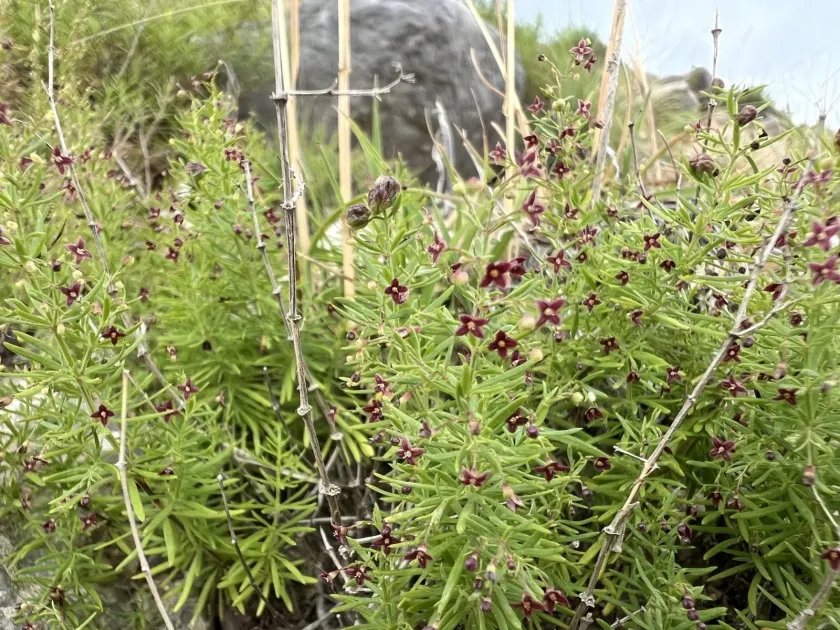
The harvest of Purple Woodruff is conducted during the peak flowering stage, when the concentration of biologically active compounds in the aerial parts is at its highest. During this period, the plant releases a characteristic aroma, and the flowers display a distinctive purple color.
Harvesting is performed mechanically using mowers adjusted to a cutting height of 5-10 centimeters above ground level. It is imperative to carry out these operations in dry weather to avoid spoilage of the raw material during drying and to prevent mold development.
Following the cut, the biomass must be transported immediately to a drying facility. Drying can be achieved in well-ventilated sheds protected from direct sunlight or in industrial dryers at temperatures not exceeding 40-45 degrees Celsius to preserve essential oils.
When seed production is the goal, harvesting is done selectively as the capsules turn brown. The seeds require careful cleaning of plant debris and additional natural drying before being stored in paper bags in a cool, dry environment to maintain long-term viability.
Post-harvest processing involves sorting the raw material, removing impurities, and milling to the required particle size. High-quality produce must have uniform color, a clean pleasant scent, and be free from any signs of pest infestation or fungal pathogen damage.