
Field woodruff
Asperula arvensis
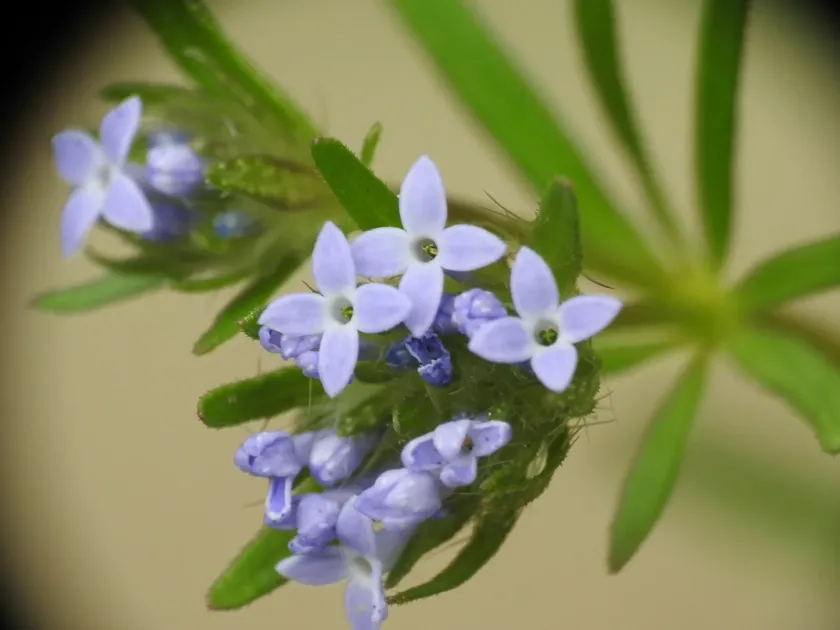
Description
Sowing dates
Seed germination in Asperula arvensis typically peaks in the autumn or early spring. Seeds are known for their longevity in the soil seed bank, making the plant difficult to eradicate completely from an area once it has been established.
For research or specialized cultivation, sowing should be conducted in rows with spacing around 20 cm. A planting depth of 2 to 3 cm is generally sufficient to trigger germination under standard spring temperatures.
Optimal growth requires good soil aeration. Mechanical hoeing between rows is essential during the early vegetative phase to keep the crop free from competing weeds that could hinder its initial development.
The plant requires adequate moisture during the emergence phase but is sensitive to waterlogging. Careful management of irrigation is crucial to ensure strong root establishment before the onset of the warmer summer months.
As the plant is light-loving, thinning or proper spacing is vital to avoid etiolation. Ensuring each plant has enough space prevents competition for light and results in a more robust development of the foliage and flowers.
Growing requirements
Field woodruff (Latin: Asperula arvensis) is an annual herbaceous plant belonging to the Rubiaceae family. While often considered a weed in cereal fields, it possesses biological characteristics that make it interesting for specific botanical and pharmaceutical research.
The plant features a four-angled stem reaching heights of 10 to 30 cm, with leaves arranged in whorls of 6 to 8. Its root system is deep and taproot-like, providing stability and access to nutrients and moisture in various soil types, particularly in carbonate-rich environments.
Field woodruff thrives in sunny, open locations. It is highly adaptable to different soil textures, including clay and loamy soils, provided they offer good drainage. It is commonly found in temperate climates across Europe and the Mediterranean region.
The species is highly competitive, especially in spring, where it can quickly establish itself among winter or spring crops. Its ability to extract nutrients efficiently often makes it a persistent competitor in agricultural ecosystems.
Agronomically, managing field woodruff involves understanding its life cycle. Since it prefers open, disturbed soils, preventive measures in crop management are key to minimizing its impact as a weed in commercial fields.
Main diseases and pests
Field woodruff is relatively resistant to many pests due to its specific chemical composition, including glycosides. However, high humidity levels can create favorable conditions for powdery mildew, which can significantly damage the plants.
Common agricultural pests like aphids may occasionally infest young shoots. While these infestations are rarely fatal, they can cause stunted growth, which is detrimental if the plant is being grown for its raw chemical components.
Crop rotation remains the most effective management strategy. Alternating the field woodruff with deep-rooted crops or competitive varieties can help reduce the seed bank and manage potential disease outbreaks.
In cases of severe infestation, integrated pest management (IPM) practices are recommended. Monitoring should focus on the undersides of leaves and the stem base where pests and pathogens often congregate.
Chemical control, if necessary, should be applied with precision to minimize environmental impact. Always consult local agricultural guidelines regarding the legal and safe use of pesticides on this specific type of vegetation.
Harvesting
The harvest phase occurs during the full bloom stage. At this point, the plant contains the highest concentration of active compounds, particularly the essential oils and coumarin derivatives for which the plant is valued.
Mechanical harvesting via forage harvesters is the standard method for large-scale operations. It is important to adjust the height of the cutting bar to ensure only the aerial parts of the plant are collected, avoiding contamination with soil.
Immediately after harvest, the biomass must be dried in a well-ventilated space or in a temperature-controlled dryer. Temperatures should not exceed 40 degrees Celsius to maintain the chemical integrity of the volatile oils.
Yields can vary significantly based on soil quality and field management. A well-managed crop can produce between 5 and 10 centners of dry matter per hectare, depending on local fertility levels and moisture availability.
Proper storage is essential to maintain the quality of the harvested material. Using breathable containers and storing the product in a cool, dark place will ensure its quality for up to two years after harvest.