
Asperula muscosa
Asperula muscosa
Description
Growing requirements
Asperula muscosa is a specialized perennial herb belonging to the Rubiaceae family. Native to mountainous regions, this plant is well-adapted to surviving in harsh, rocky environments where few other species can thrive.
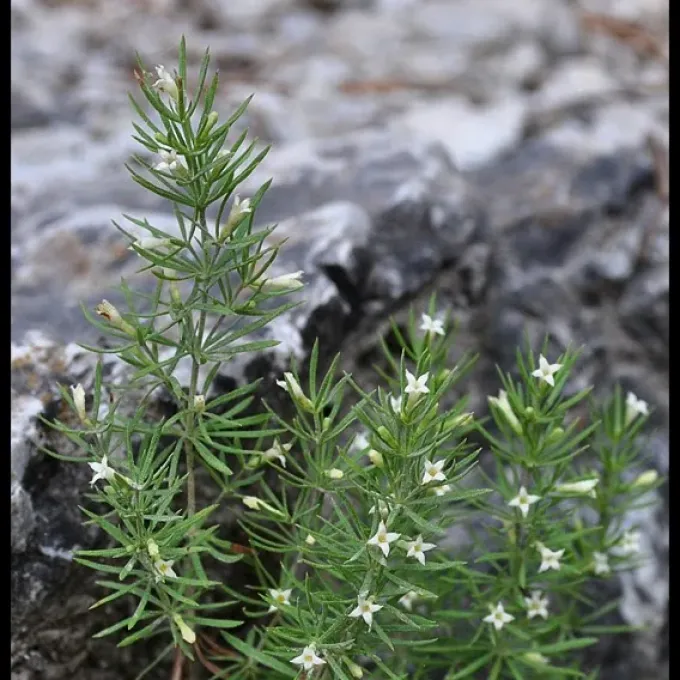
The botanical structure of the plant is defined by its moss-like, cushion-forming habit. Its stems are highly branched and compact, which serves as a protective mechanism against extreme temperature fluctuations and intense mountain winds.
For successful cultivation, the plant requires a substrate that mimics its natural habitat: sandy or stony, well-drained soil with a neutral to slightly alkaline pH. Good aeration is crucial as the root system is highly sensitive to hypoxia caused by waterlogging.
Exposure to full sunlight is essential for maintaining the compact shape of the cushions. If grown in partial shade, the plant tends to lose its characteristic density, leading to uneven growth and a reduced ability to flower profusely.
The species prefers cool temperatures, especially during the growth season. In warmer regions, it is necessary to provide adequate ventilation and avoid excessive humidity, which can promote fungal infections in the dense foliage.
Harvesting
The primary utility of Asperula muscosa lies in its ornamental value for rock gardens and crevice plantings. It is prized by collectors for its unique texture and its ability to withstand challenging environmental conditions.
Propagation is usually achieved by division in the spring, allowing the plant to establish itself before the heat of mid-summer. Maintenance involves minimal intervention, primarily keeping the cushions free of weeds and dead organic debris that could trap moisture.