
Argyrolobium saharae
Argyrolobium saharae
Description
Growing requirements
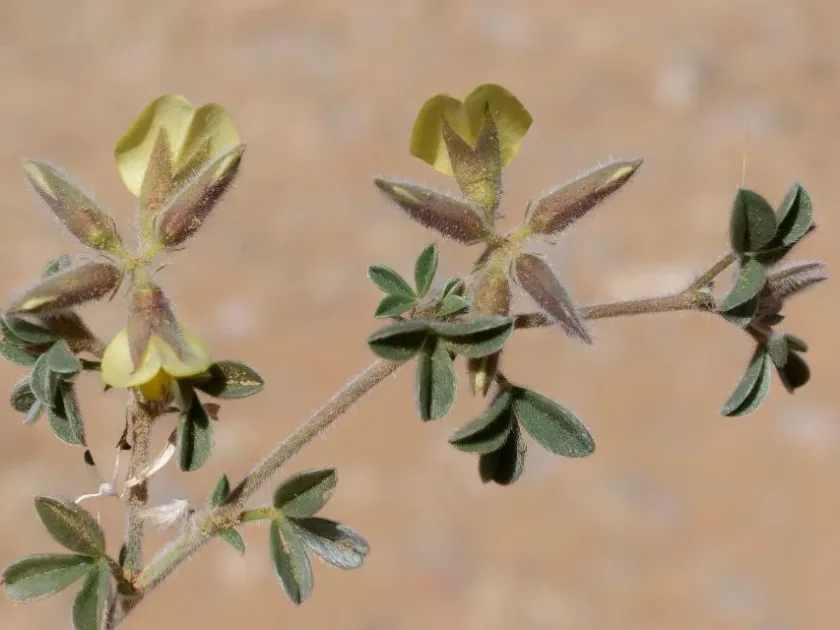
Argyrolobium saharae is a perennial subshrub belonging to the Fabaceae family. It is a specialized plant species adapted to the harsh conditions of the Sahara and other North African arid zones, playing a crucial role in desert vegetation cover.
The plant features distinct pubescent leaves that provide protection against extreme solar radiation and reduce water loss through transpiration. This adaptation is essential for its survival in environments with scarce and unpredictable rainfall.
Regarding soil requirements, the species thrives in sandy, well-drained soils. It exhibits a remarkable ability to establish itself in nutrient-poor substrates, often serving as a pioneer species for soil stabilization in desertified landscapes.
The climate requirements include a high tolerance for extreme temperatures and intense sunlight. Unlike many conventional forage crops, this species maintains metabolic activity under high thermal stress, making it a candidate for sustainable agriculture in deserts.
Economically, Argyrolobium saharae is highly valued as a forage plant for camels, sheep, and goats. Its biomass provides essential nutrients in rangelands where other plant species fail to grow, supporting nomadic pastoral systems.
Main diseases and pests
The primary threats to the health of these plants include seed-feeding insects, specifically weevils, which can significantly reduce the viability of the next generation. This impacts the natural propagation of the species.
Root pathogens, such as various fungi, pose a risk if the soil becomes waterlogged due to uncharacteristic flooding events. Being a xerophyte, the plant is not equipped to handle stagnant water around its root collar.
Overgrazing remains a significant threat, as intensive pressure from livestock prevents the plant from flowering and setting seeds. This leads to the long-term decline of stands in heavily managed rangeland areas.
Herbivorous insects can damage young, succulent tissues during the short growth season, which may reduce the plant's overall photosynthetic capacity. Regular monitoring of the stand density is recommended.
Management of these threats in remote areas is challenging and relies mostly on controlled rotational grazing systems. These methods ensure that the plants have sufficient recovery periods between grazing cycles to maintain population stability.