
Argyrolobium arabicum
Argyrolobium arabicum
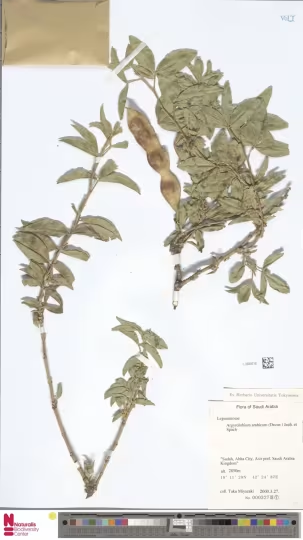
Description
Sowing dates
Argyrolobium arabicum is a perennial legume species that primarily reproduces through seeds, which often require scarification to break dormancy.
The optimal sowing time aligns with the onset of the cool season, coinciding with the beginning of the annual rainfall in its native arid habitats.
Seeds should be planted at a shallow depth of 1–2 cm to ensure emergence, as the seedlings need rapid access to light to establish their photosynthetic capacity.
In restoration projects, direct seeding into prepared soil patches has proven effective for re-establishing plant cover in degraded regions.
Quality control of the seed material is essential, focusing on purity and the percentage of hard seeds to predict future stand density accurately.
Growing requirements
This species is highly adapted to arid and semi-arid climates, thriving in areas with low annual precipitation and significant thermal fluctuations.
It prefers well-drained sandy or sandy-loam soils and is notably tolerant of moderate levels of salinity, which is a rare and useful characteristic for such crops.
The plant features a deep taproot system, which allows it to scavenge for deep-seated moisture during the long, hot dry seasons characteristic of its range.
It requires full sun exposure and does not tolerate competition from taller vegetation, making it best suited for open desert or semi-desert environments.
The resilience of this plant makes it a prime candidate for efforts aimed at preventing soil erosion in areas prone to desertification.
Yield
The biomass yield of Argyrolobium arabicum is highly dependent on the timely availability of water, showing rapid growth after rainfall events.
It provides a significant source of high-protein forage, which is essential for livestock grazing in desert regions during the critical winter months.
Seed production is generally modest and varies significantly depending on the environmental conditions during the flowering phase of the plant's life cycle.
Sustainable management practices, including controlled grazing, are necessary to ensure the plant maintains its ability to produce vegetative growth annually.
While not a traditional industrial crop, its value in ecological restoration and pastoral sustainability is recognized by regional agronomists.
Main diseases and pests
The primary threat to the species is overgrazing, which prevents the plants from reaching maturity and depositing new seeds into the soil bank.
Insect larvae that feed on roots can cause significant damage, especially if the plants are already stressed by lack of water or high salinity.
Fungal diseases are rarely an issue in its native dry habitats, but they can occur if the plant is grown under excessively humid irrigation conditions.
Competition from fast-growing desert ephemerals can suppress the development of seedlings during the short, competitive spring growing season.
- Overgrazing impacts on plant longevity.
- Root-feeding insects causing plant decline.
- Competition from opportunistic weed species.