
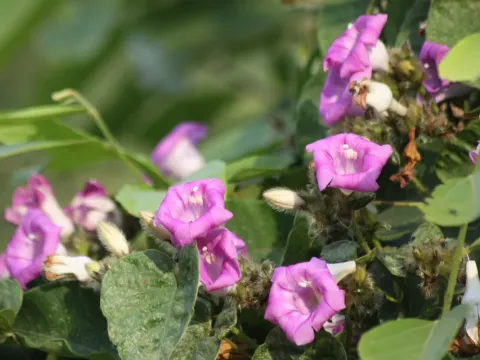
Argyreia
Argyreia
Seeds of Argyreia are usually sown in late winter or early spring to ensure a long growing season. Before planting, seeds require scarification of the hard outer shell and soaking in warm water for 24 hours to improve germination rates.
What the section contains


Argyreia
Use a light, fertile, and well-draining substrate for sowing to prevent moisture stagnation. Containers should be covered with plastic or glass to create a greenhouse effect, maintaining a soil temperature of 22–25 degrees Celsius.
Seedlings typically emerge within 2–4 weeks under stable temperature and light conditions. Once the first two true leaves develop, seedlings should be transplanted into individual pots, providing ample room for root system development.
Young plants are highly sensitive to temperature fluctuations and direct sunlight, requiring a gradual acclimation process. In the first months, avoid overwatering, as the roots are particularly prone to rot in damp, heavy soil conditions.
Provide a trellis or support system early on, as Argyreia is a vigorous climbing plant. Regular repotting into larger containers is necessary throughout the growing season to accommodate the rapid expansion of the root system.
Argyreia, a member of the Convolvulaceae family, is a heat-loving tropical vine native to the Indian subcontinent. Successful cultivation requires a warm and humid environment, avoiding significant temperature swings.
The plant thrives in bright, filtered light but requires protection from intense midday sun, which can scorch the foliage. In temperate climates, Argyreia is best cultivated as a greenhouse or conservatory plant.
The soil should be loose, neutral to slightly acidic, and rich in organic matter. Effective drainage is a critical requirement, as the plant reacts poorly to waterlogged or overly compacted soil conditions.
During the active growth phase, keep the soil consistently moist, but significantly reduce watering during the winter months. Maintaining high air humidity is essential; consider regular misting or placing the plant near humidifying sources.
Regular fertilization with balanced mineral fertilizers during spring and summer supports vigorous vine growth. Cease all fertilization during the winter months to allow the plant to enter its natural period of dormancy.
Common pests for Argyreia in indoor environments include spider mites and mealybugs, which thrive in low-humidity conditions. Regular foliage inspection and the use of insecticidal soap help manage and control infestations.
Root rot remains a major threat, usually caused by improper watering practices or inadequate drainage. If fungal infection is suspected, reduce watering immediately and apply systemic fungicides as necessary.
Leaf yellowing and shedding often indicate poor microclimate conditions, such as insufficient lighting or exposure to cold drafts. The plant is sensitive to abrupt transitions between environments, especially from humid greenhouses to dry living spaces.
Viral infections are less common but can be transmitted through contaminated tools or vectoring pests. Maintaining strict hygiene with gardening equipment and sterilizing soil prior to use are effective preventative measures.
If leaf spot diseases appear, prune the infected foliage immediately to prevent further spread. Ensuring adequate air circulation around the vine significantly lowers the likelihood of such fungal developments.