
Woolly morning glory
Argyreia nervosa
Description
Sowing dates
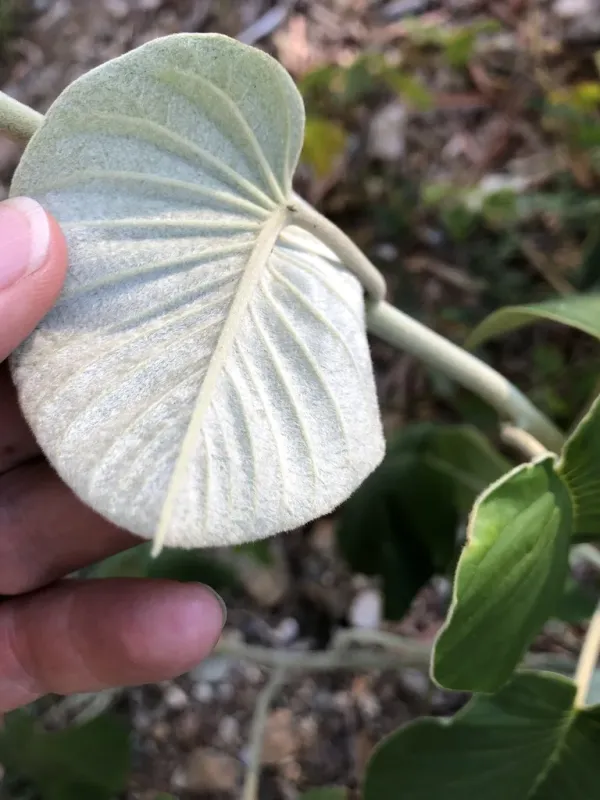
The Woolly morning glory (Argyreia nervosa) is a perennial woody climber from the Convolvulaceae family, native to the Indian subcontinent and parts of tropical Asia.
Cultivation starts with seed propagation. Because the seeds have a very hard seed coat, scarification is necessary to ensure moisture penetration for germination.
Sowing should be done in a warm, frost-free environment during the spring. The seeds are placed in a well-draining potting medium about 1-2 cm deep.
Maintaining a constant soil temperature of approximately 25°C is crucial for successful germination, which usually takes between two to four weeks.
Once the seedlings develop their first true leaves, they should be transplanted into larger containers with sturdy support systems for their climbing stems.
Growing requirements
This species is highly sensitive to cold and must be grown in tropical or subtropical climates, or indoors in temperate zones with stable temperatures.
Rich, fertile, and well-drained soil is essential. A pH level between 6.0 and 7.0 provides the best environment for nutrient uptake.
The plant requires significant space and strong trellises or supports because of its rapid and aggressive growth habit in favorable conditions.
It prefers full sun to partial shade; however, intense direct light is needed to support its thick, silver-backed foliage and flowering cycle.
Watering should be deep but infrequent enough to allow the top layer of soil to dry out slightly between irrigation cycles.
Main diseases and pests
Spider mites are common pests, particularly when the plant is kept in dry, indoor environments with poor air circulation.
Mealybugs are another potential threat that tends to congregate in the axils of the leaves, weakening the plant by sucking sap.
Root rot is the most common physiological disorder, usually caused by overwatering or poor drainage in the potting container.
Fungal leaf spot can develop if the foliage remains wet for too long or if humidity levels are consistently excessive.
Regular monitoring and physical removal of pests, combined with proper ventilation, are the best methods for maintaining plant health.