
Amyema preissii
Amyema preissii
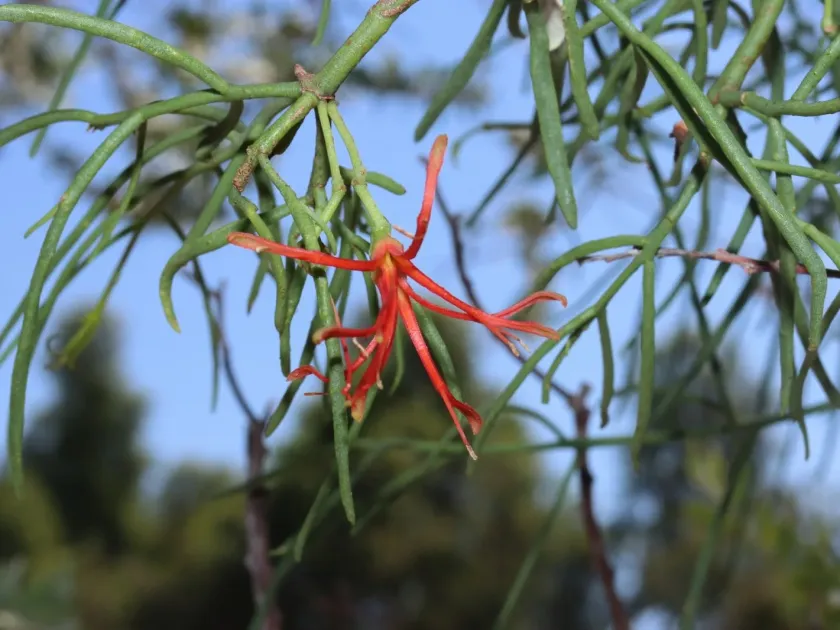
Description
Growing requirements
Amyema preissii is a member of the Loranthaceae family, known commonly as a type of mistletoe. It functions as a hemiparasite, meaning it derives water and nutrients from its host while performing photosynthesis using its own green leaves.
Native to Australia, this plant is primarily found in arid and semi-arid zones. It exhibits a strong preference for Acacia species as its primary hosts, utilizing specialized organs known as haustoria to tap into the vascular tissue of the tree.
The botanical structure of Amyema preissii is highly specialized for arid survival. Its leaves are thick and succulent, which helps to reduce water loss through transpiration, a vital adaptation for enduring the harsh Australian summer heat.
The dispersal of the plant is entirely dependent on specific bird species, particularly mistletoe birds. These birds consume the berries and deposit the sticky seeds onto branches, which is essential for the successful germination of the parasite.
Environmental requirements for growth include a healthy host tree and an active population of avian pollinators and seed dispersers. The plant does not require specific soil, as it draws all necessary moisture and minerals directly from the host plant's sap.
Main diseases and pests
Major threats to Amyema preissii are primarily linked to the ecological health of its host trees. Excessive drought or disease affecting the host tree can lead to the loss of the parasite's nutrient source, resulting in the death of the mistletoe.
Certain insect populations can feed on the foliage of the mistletoe, acting as natural population regulators. While this is part of the ecological balance, severe infestations can occasionally weaken smaller or younger clumps of the plant.
Habitat fragmentation due to land clearing significantly reduces the availability of suitable host trees. When large areas of native vegetation are removed, the dispersal cycles managed by birds are disrupted, causing a decline in mistletoe populations.
Climate change poses a long-term threat to the plant, as changes in rainfall patterns directly affect the health of the host trees, making them less capable of supporting parasitic growth over extended periods.
Invasive pathogens or parasites that attack the host tree's bark can also interfere with the attachment site of the haustoria, effectively pruning the mistletoe naturally by severing its connection to the host's water supply.