
Amyema pendulum
Amyema pendulum
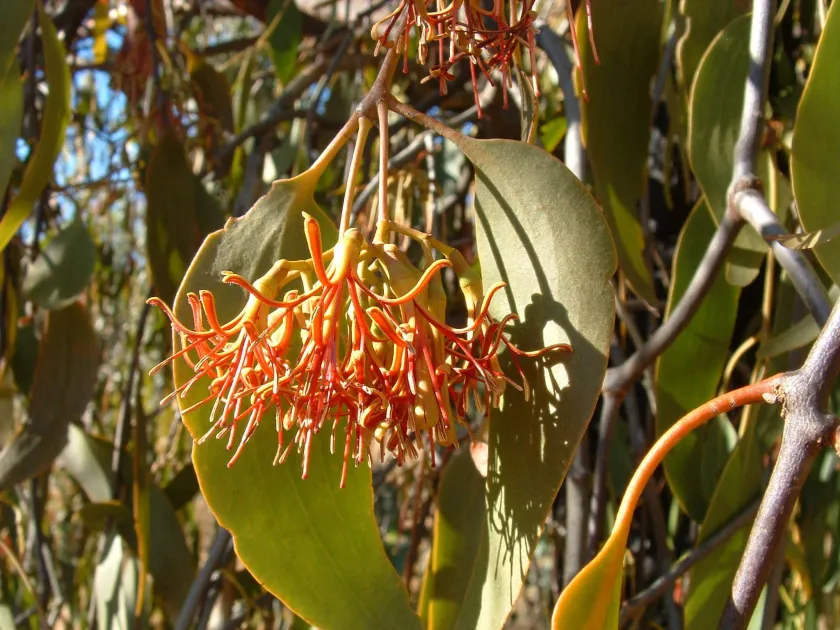
Description
Growing requirements
Amyema pendulum, commonly known as the pendulous mistletoe, is a native Australian hemiparasitic shrub belonging to the Loranthaceae family. This species is specialized in attaching itself to the branches of various Eucalyptus and Acacia species to extract water and mineral nutrients.
The plant is widely distributed across the eastern and southern regions of the Australian continent. It is highly adapted to the local climatic conditions, thriving in environments that support the growth of its host trees, from coastal forests to inland woodlands.
Botanically, it is characterized by its long, drooping, leathery leaves which provide the inspiration for its common name. The plant retains its ability to photosynthesize, allowing it to supplement the nutrients obtained from the host with carbon produced through its own foliage.
As a hemiparasite, its ecological role is complex. It serves as a vital resource for various birds and insects, particularly through its nectar-rich flowers and succulent fruits, which are essential for the survival of many native bird species.
In terms of agricultural management, Amyema pendulum is not a crop but rather a native element of the ecosystem. Its presence on orchard trees or timber plantations is usually managed by pruning to ensure the health and structural integrity of the host trees.
Main diseases and pests
The primary threat to the population of this mistletoe is the loss of old-growth trees. Since the species relies entirely on mature host trees for its lifecycle, deforestation and land clearing directly threaten its local survival.
Pests such as specialized beetles and larvae can occasionally cause significant damage to the plant's foliage. However, in a healthy ecosystem, these populations are kept in check by natural predators and parasitoids.
Fungal diseases occurring at the haustorial junction are a major concern. These infections can inhibit the transport of water from the host tree, causing the distal parts of the mistletoe to wither and eventually fall off.
Environmental stressors like severe drought cycles can reduce the mistletoe's survival rate. When the host tree faces severe moisture stress, it restricts the flow of sap, which limits the energy available to the parasite.
Human interference, including urban development and changing fire regimes, disrupts the bird populations responsible for seed dispersal. Without the movement of seeds to new hosts, the long-term regeneration of the species is compromised.