
Amyema linophyllum
Amyema linophyllum
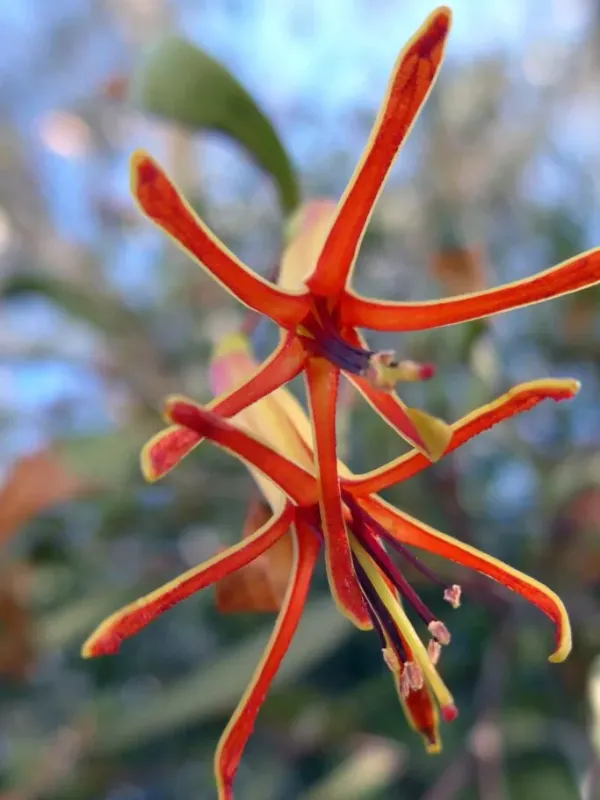
Description
Growing requirements
Amyema linophyllum is a notable species within the Loranthaceae family, characterized by its parasitic nature. Unlike traditional crops, it thrives by attaching itself to the branches of specific host trees, primarily within the Casuarina genus, in Australian forest ecosystems.
The plant functions as a hemiparasite, meaning it performs photosynthesis but relies on the host tree for water and dissolved minerals. This evolutionary adaptation allows it to flourish in the canopy layer where it has direct access to sunlight.
Its botanical morphology is distinct, featuring thin, linear foliage that mimics flax leaves, which gives the species its specific name. The plant produces tubular flowers that are specifically adapted for pollination by native nectar-feeding birds.
Environmental requirements are inextricably linked to the host's health and the local climate. Amyema linophyllum thrives in temperate to subtropical regions where rainfall is sufficient to maintain the vigor of the host trees throughout the annual growth cycle.
While not a farmed crop, the species holds ecological value. It acts as a keystone species by providing shelter and food for various birds and insects, which in turn assist in the dispersal of its seeds across the native landscape.
Main diseases and pests
The primary threat to Amyema linophyllum is the loss of host trees due to land clearing and fragmentation. Since the plant cannot survive without a suitable host, the removal of Casuarina forests results in immediate habitat loss for this parasite.
Climate-induced stressors, such as severe droughts, directly impact the plant's ability to maintain its water balance. When a host tree experiences severe water stress, it may shed limbs, leading to the physical loss of the parasitic population.
Pathogenic threats to host trees, including fungal infections of the cambium layer, can disrupt the structural integrity of the branch attachment sites, effectively starving the Amyema specimens of their nutrient supply.
Increased frequency of bushfires poses a critical risk. As the plant resides in the canopy, it is highly susceptible to canopy fires that can devastate local populations and interrupt the reproductive cycle.
Competition from other epiphytic or parasitic species for canopy space can limit the spread of Amyema linophyllum in mature forest stands where resources are limited and space is highly contested.