
Amyema miraculosum
Amyema miraculosum
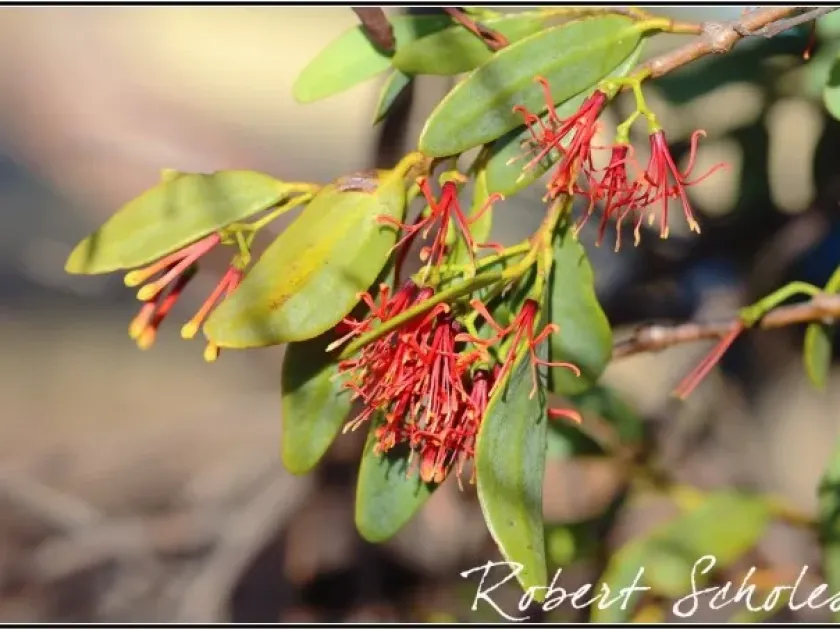
Description
Growing requirements
Amyema miraculosum is a species of hemiparasitic shrub belonging to the Loranthaceae family. Unlike conventional agricultural crops, this plant functions as an epiphyte and parasite, obtaining water and nutrients from host trees, typically species of Eucalyptus and Acacia.
The botanical structure of this plant includes specialized organs known as haustoria, which penetrate the xylem of the host plant. This allows the mistletoe to bypass the soil-root system, establishing a direct connection to the host’s water supply.
Environmental requirements for Amyema miraculosum are aligned with the arid regions of Australia. The plant is drought-tolerant, possessing leathery or succulent foliage that minimizes water loss while maximizing the efficiency of gas exchange during hot days.
The lifecycle relies heavily on biotic dispersal. Birds ingest the fleshy fruits, and the sticky seeds are deposited on tree branches via excrement. This sticky substance acts as a natural adhesive, ensuring the seed remains in contact with the bark until germination occurs.
While not a crop, it holds ecological value. However, in silviculture, its presence is often managed to prevent tree decline. It is not cultivated for human use, but rather studied for its complex physiological adaptations to host-parasite relationships.
Main diseases and pests
The primary threats to Amyema miraculosum include herbivory by specialized insects, such as butterfly larvae, which feed on the foliage. These biological controls prevent the mistletoe from overwhelming the host tree in stable ecosystems.
Pathogenic fungi can occasionally affect the structural integrity of the plant, especially in high-humidity environments, though this is secondary to the competitive stress it exerts on the host.
Management of the plant in managed forests typically involves mechanical removal. Pruning the infested branches is the most effective way to eliminate the parasite without resorting to chemical interventions that could harm the host tree.
Environmental fluctuations, such as extreme heatwaves or prolonged drought that kills the host, inevitably lead to the death of the dependent Amyema miraculosum, demonstrating the high level of physiological integration between the two.
Research into sustainable management focuses on balancing the presence of the parasite, as it provides nectar and fruit for native wildlife, against the economic impact on timber or orchard production.