
Alphonsea elliptica
Alphonsea elliptica
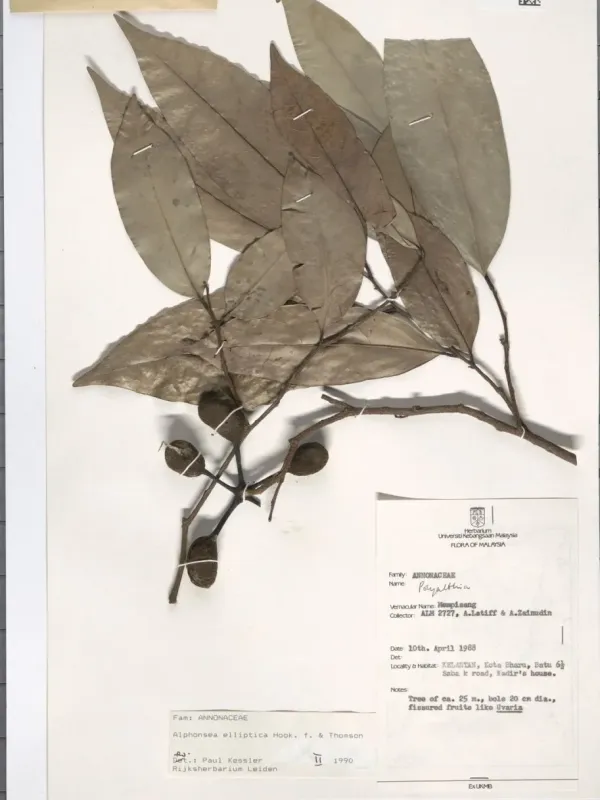
Description
Growing requirements
Alphonsea elliptica is a species belonging to the Annonaceae family, native to the tropical regions of Southeast Asia. This tree is adapted to high-humidity environments and typically thrives under the canopy of dense forests.
The plant requires a warm, tropical climate to survive, showing zero tolerance for frost or cold snaps. Optimal growth is achieved in temperature ranges between 22°C and 30°C, with consistent moisture levels throughout the year.
Soil requirements are strict, favoring deep, well-draining, and nutrient-rich substrates. The plant is particularly sensitive to waterlogging, which can lead to rapid root decay if soil drainage is not properly managed.
Light management is crucial for the successful development of Alphonsea elliptica. While adult trees can tolerate varying degrees of light, young saplings require filtered light to prevent leaf scorching and excessive water loss.
Good agricultural practices include consistent fertilization programs that provide essential micronutrients. Maintaining a slightly acidic to neutral soil pH is recommended for maximum nutrient uptake and overall tree vitality.
Harvesting
The economic value of Alphonsea elliptica is primarily associated with its edible fruits, which are harvested by local communities. The fruits are gathered when they exhibit specific color changes, signaling peak maturity.
Post-harvest handling is delicate, as the fruits have a relatively short shelf life. Proper logistics and quick distribution to local markets are essential to preserve the quality and flavor profile of the harvest.
Beyond fruit production, the species contributes to the ecological stability of its native habitats. It is occasionally used in botanical gardens and agroforestry projects to promote species diversity in tropical climates.
Propagation is primarily achieved through seeds, which should be sown promptly after extraction from the fruit. Using high-quality substrate and controlled nursery conditions significantly improves germination rates.
Future research may further explore the medicinal and nutritional potential of this species. Its role in small-scale subsistence farming underscores the importance of traditional knowledge in managing and harvesting such tropical trees.