
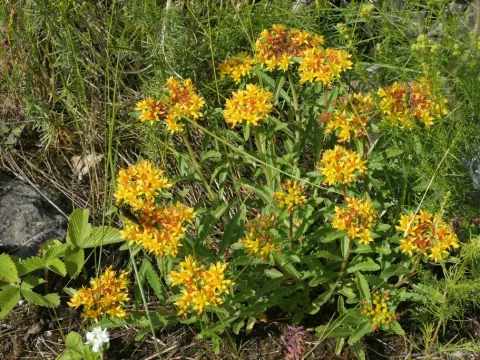
Aizoon
Aizoon
Sowing of Aizoon is carried out during the spring period, when the soil temperature warms up to 15–18 degrees Celsius. For uniform germination, seeds should be sown in a light, sandy substrate that ensures excellent drainage.
What the section contains


Aizoon
The sowing depth should be minimal, as the small seeds require sunlight to successfully germinate. In greenhouse conditions or nurseries, seeds are spread on the surface of moistened substrate without covering them deeply.
After the first true leaves appear, the plants are pricked out into individual pots or planted in their permanent location in open ground. The spacing between plants should be at least 20–30 centimeters to ensure adequate air circulation.
In regions with harsh climates, seeds can be sown in containers in late winter, provided with additional LED lighting. This allows for hardened seedlings to be ready by the time stable warm weather arrives.
It is crucial to avoid excessive moisture during germination, as Aizoon seedlings are extremely sensitive to fungal infections caused by stagnant water.
Aizoon is a typical xerophyte belonging to the Aizoaceae family, which is perfectly adapted to extremely dry and hot living conditions. The plant has a well-developed root system capable of extracting moisture from deep soil layers.
For normal growth, the crop requires maximum solar illumination throughout the entire day. In the shade, the plant becomes leggy, loses its compact shape and decorative appeal, and reduces its vitality.
The soils should be primarily sandy, rocky, or loamy with a neutral or slightly alkaline pH. The presence of heavy clay soils is detrimental to the root system due to the risk of waterlogging.
The crop tolerates saline soils very well, making it a promising candidate for landscaping coastal territories. The plant does not require frequent fertilization, preferring nutrient-poor soils.
Aizoon exhibits high resistance to sudden temperature fluctuations, although it requires protection during extreme frosts in regions where it is grown as a perennial.
The main danger to Aizoon is posed by fungal diseases that develop under conditions of excessive humidity and poor air circulation. Specifically, powdery mildew can affect the leaves during periods of high humidity.
Root rots are the most common problem arising from improper watering practices. To prevent this, strict control over substrate moisture is necessary.
Among pests, spider mites are most commonly encountered on Aizoon plantings, as they multiply actively in hot, dry climates. They suck sap from the leaves, leading to deformation and yellowing.
Aphids can also damage young shoots, weakening the plant's immunity. It is recommended to perform a prophylactic inspection of the plants every two weeks during the active vegetation season.
Pest control should be carried out using specialized biological products or target-specific insecticides, strictly following the dosages recommended by the manufacturer.
The harvesting of medicinal or technical raw materials, if applicable, is carried out during the period of maximum accumulation of active substances in the aerial part of the plant.
Leaves and shoots are cut with a sharp tool in dry weather, once the morning dew has completely evaporated. This is critically important for preventing the spoilage of raw materials during storage.
After harvesting, the green mass is immediately sent for drying in a well-ventilated, dark room. It is important to ensure rapid dehydration to preserve biologically active components.
In the case of growing Aizoon as an ornamental crop, maintenance involves removing dead shoots to stimulate new growth and maintain the neat appearance of the plantings.
Dried raw materials should be stored in airtight containers to prevent the ingress of moisture and direct sunlight, which degrade pigments and beneficial microelements.