
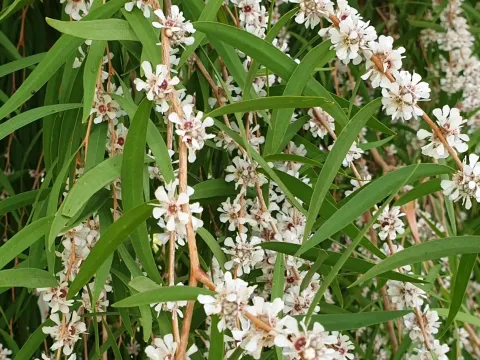
Agonis
Agonis (DC) Lindl.
Agonis (DC) Lindl. is a genus of evergreen shrubs and trees belonging to the Myrtaceae family. These plants are native to Western Australia, where they have adapted to specific ecological niches.
What the section contains

Agonis
The cultivation of Agonis requires well-drained, sandy soils with a slightly acidic to neutral pH. Proper soil aeration is essential for preventing the root system from suffocating in heavy, waterlogged ground.
Climate requirements for Agonis are strict, as the plant is not frost-tolerant. In many regions, it is cultivated primarily in greenhouses or as a potted plant, preferring locations with high sunlight exposure.
Agronomic practices for this culture involve maintaining a consistent, moderate irrigation schedule. While they are drought-tolerant once established, young plants require regular water to develop a strong root system.
The economic value of Agonis lies in its production of aromatic essential oils found in its foliage. Additionally, its aesthetic properties make it a popular choice for landscape architecture in temperate climates.
Root rot is the primary physiological threat to Agonis, typically caused by poor drainage and excessive watering, which creates an anaerobic environment for the roots.
Spider mites are common pests that thrive in indoor environments, frequently attacking the leaves and leading to discoloration and premature defoliation.
Scale insects present a significant risk by clustering on stems, where they extract sap and compromise the structural integrity of the plant's branches.
Integrated pest management, including regular foliage inspection and the use of insecticidal soaps, is recommended to keep pest populations at a manageable level.
Proper airflow and avoiding high humidity levels around the foliage are crucial cultural measures to prevent fungal infections and pest outbreaks.