
Purple false foxglove
Agalinis purpurea
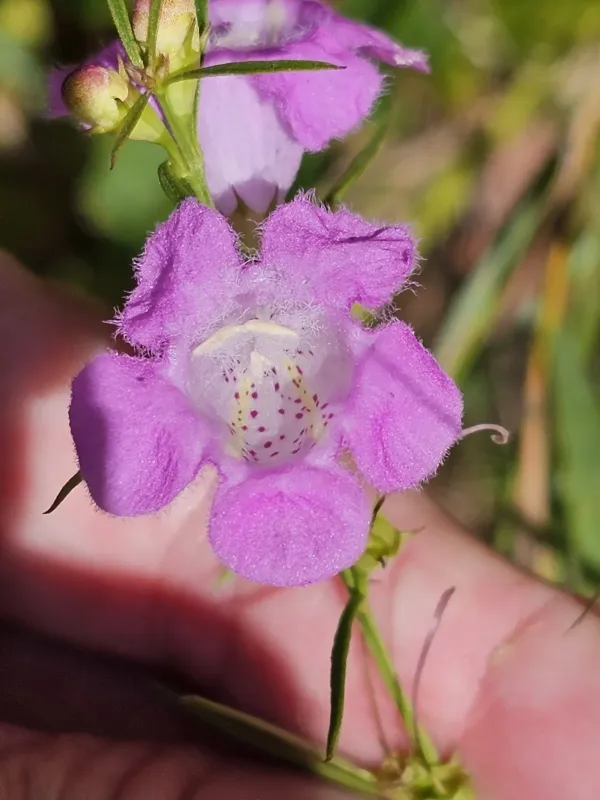
Description
Sowing dates
Purple false foxglove is an annual herb that relies on specific environmental cues for germination. Seeds typically require a cold stratification period during winter to break dormancy before they can sprout in the following spring.
In cultivation, seeds are sown on the surface of the soil. They are extremely small and need exposure to light and high moisture levels. Covering them with a thin layer of fine substrate or sand is sufficient to hold them in place.
Because the species is a hemiparasite, successful sowing must include the presence of host grasses in the immediate vicinity. Seeds should be sown directly into the root zone of suitable companion grasses to ensure that young seedlings can establish haustorial connections.
The timing of sowing is critical; if sown too late in the spring, the plants may not reach maturity before the onset of autumn frost. Sowing in late autumn or very early spring is generally recommended to mirror natural conditions.
Optimal germination occurs when soil temperatures remain stable and moisture is kept constant. If the substrate dries out during the initial development phase, the seedlings will fail to establish their parasitic connection and will perish.
Growing requirements
This member of the Orobanchaceae family functions as a hemiparasite, meaning it produces its own energy via photosynthesis but supplements its nutrient and water intake through the roots of host plants.
The plant requires full sun exposure to thrive. Its photosynthetic rate is high, and any significant shading from taller vegetation will inhibit its growth, flower production, and overall vigor during the growing season.
Soil requirements focus on high moisture retention. Agalinis purpurea is naturally found in wet meadows, marshes, and damp prairies. The soil should be consistently moist throughout the life cycle of the plant.
It prefers neutral to slightly acidic soil conditions. Avoid using synthetic fertilizers, as they can disrupt the symbiotic relationship between the plant and its host, often favoring the host to the detriment of the parasite.
Climatic requirements align with temperate regions that experience distinct seasons. While it handles moisture well, extreme drainage issues or prolonged droughts are detrimental to its development.
Main diseases and pests
The most significant threat to Agalinis purpurea populations is the degradation of its natural wetland habitats. Wetland drainage and landscape conversion drastically reduce the availability of suitable host plants and moisture.
Insects, such as certain lepidopteran larvae, can occasionally feed on the foliage or flowers. However, given the plant's parasitic lifestyle, the primary limiting factor remains the presence of its host rather than pest pressure.
Root rot caused by pathogens can occur if the soil is waterlogged for too long without adequate oxygen exchange. Maintaining a balance between moisture and soil aeration is essential for disease prevention.
Invasive species represent a major challenge, as they often outcompete both the Agalinis and its host grasses for space, light, and soil resources. Careful management of the surrounding flora is necessary to preserve the population.
Chemical contamination from agricultural runoff, particularly herbicides, poses an existential threat to this species. It is highly sensitive to chemical agents and cannot survive in environments treated with intensive herbicides.