
Gattinger's false foxglove
Agalinis gattingeri
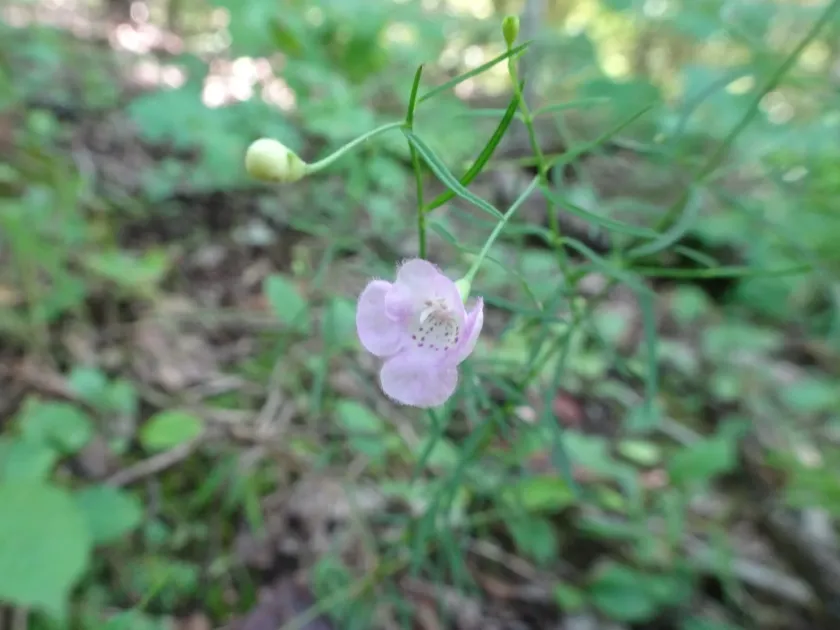
Description
Growing requirements
Gattinger's false foxglove (Agalinis gattingeri) is a unique herbaceous plant species belonging to the Orobanchaceae family. It is recognized primarily as a facultative hemiparasite, meaning it can synthesize its own food but derives extra nutrients and water from host plants.
The native range of this species is located in North America, where it thrives in specific ecological niches. It is typically found in open habitats, including alvar grasslands, dry limestone prairies, and rocky barrens where vegetation cover is relatively thin.
Botanically, the plant is characterized by its slender, often branched stems and narrow, linear leaves arranged in opposite patterns. The flowers are notable for their showy, funnel-like shape and attractive pink or purple hues, which bloom during the late summer months.
Environmental requirements for this plant are quite specific, as it is a strictly heliophilic species. It demands full sun exposure to complete its life cycle and cannot survive in heavily shaded or forested environments where competing vegetation dominates.
Soil conditions must be well-draining, typically consisting of rocky, thin substrates with a neutral to alkaline pH. The plant's ability to form haustorial connections with the roots of various host grasses allows it to survive in nutrient-poor soils where other species might struggle.
Main diseases and pests
Habitat loss represents the most significant threat to the survival of Agalinis gattingeri. The conversion of its native prairie and limestone grassland habitats into agricultural or residential land has drastically reduced its population distribution.
The species is particularly susceptible to soil-borne pathogens, especially during periods of excessive moisture or poor drainage. Root rot and various fungal infections can destroy the plant's delicate vascular system, leading to rapid decline.
Herbivory by insects poses a recurring threat, as larvae of various Lepidoptera species may feed on its reproductive structures. Damage to the flowers and developing capsules prevents seed maturation, directly impacting the species' potential for propagation.
Invasive non-native plants are major competitors that aggressively displace Gattinger's false foxglove. By shading out the sun-loving agalinis and altering local soil nutrient availability, these invaders threaten the plant's existence in its own native range.
Climate change, manifesting as shifts in precipitation patterns, disrupts the vital connection between the hemiparasite and its hosts. If the host plant suffers due to drought, the dependent agalinis will experience a severe reduction in its overall health and reproductive success.