
Agalinis divaricata
Agalinis divaricata
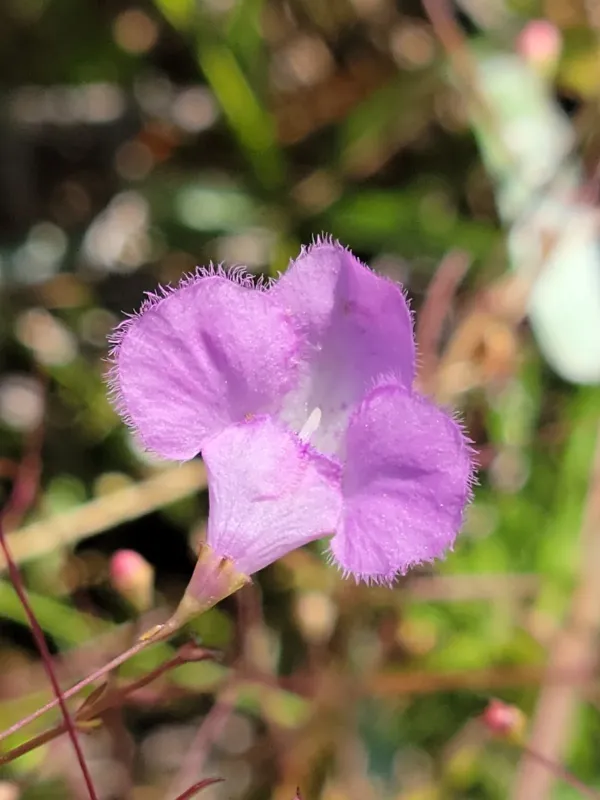
Description
Growing requirements
Agalinis divaricata is a distinctive herbaceous plant belonging to the Orobanchaceae family. Known for its specific biological traits, it operates as a facultative hemiparasite, forming connections with the roots of host plants to supplement its nutrient uptake.
Originating from North American landscapes, particularly in the southeastern regions, this plant has adapted to open, sun-drenched environments. It thrives in habitats such as pine savannas and open woodlands, where well-drained, sandy soils dominate the landscape.
The botanical structure of Agalinis divaricata is characterized by its divaricately branched stems. Its leaves are linear and narrow, an evolutionary adaptation that significantly reduces water loss through transpiration, allowing the plant to survive in arid, high-light conditions.
Optimal growth requires specific environmental conditions that mimic its natural ecosystem. The soil must be highly porous and well-drained, as the plant is extremely susceptible to root pathogens if the substrate remains saturated with moisture for extended periods.
Cultivation practices are inherently linked to the presence of host plants. For successful development, growers must ensure that suitable companion plants are present to facilitate the formation of haustoria, which are essential for the plant's mineral and water absorption.
Main diseases and pests
Fungal infections represent the primary threat to the stability of the crop. Excessive soil moisture often leads to root rot, which is fatal to the plant, as it interrupts the delicate physiological connection established with the host plant's root system.
Insect pests, such as aphids and spider mites, are frequent visitors that feed on the tender foliage of Agalinis divaricata. If left unmanaged, these infestations can drain the plant's resources and lead to stunted growth or total reproductive failure.
Competition from aggressive invasive weeds poses a significant challenge. These plants can outcompete Agalinis divaricata for essential sunlight and nutrients, creating a stress environment that weakens the plant's ability to maintain its host-parasite relationship.
Environmental fluctuations, particularly irregular precipitation, can cause severe stress. Since the plant relies on a precise balance of moisture and host resources, any abrupt change in the environment disrupts the photosynthetic and nutrient-gathering processes.
Loss of specialized pollinators is another critical threat. As an obligate or near-obligate outcrosser in many conditions, the lack of appropriate insect activity prevents successful seed set, leading to the long-term decline of the population within the agricultural site.