
Agalinis aphylla
Agalinis aphylla
Description
Growing requirements
Agalinis aphylla is a distinct herbaceous species belonging to the Orobanchaceae family. Unlike conventional crops, this plant is a specialized hemiparasite, meaning it relies on host plants for water and nutrients while retaining some photosynthetic ability.
Native to the southeastern regions of North America, this species inhabits specific ecosystems including wet pine savannas and moist grassland areas. It flourishes in nutrient-poor, acidic soils that would be hostile to many common agricultural plants, highlighting its specialized niche adaptation.
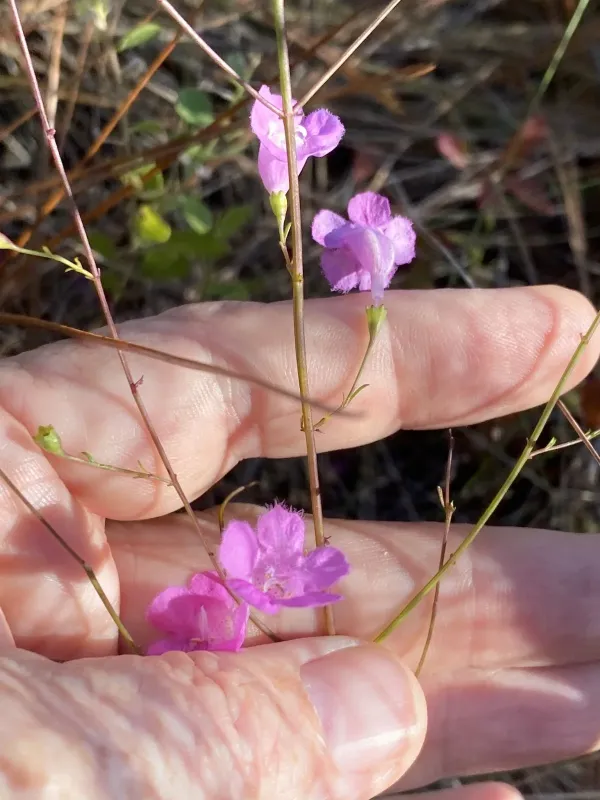
Morphologically, the plant is characterized by a significant reduction in leaves, which gives it a leafless appearance. The stems are slender and erect, equipped with specialized root structures known as haustoria that penetrate the root systems of nearby vegetation to extract essential resources.
Environmental requirements include a consistent supply of moisture and open exposure to sunlight. The plant is highly sensitive to changes in soil hydrology and requires stable environmental conditions to maintain the delicate symbiotic or parasitic relationships necessary for its growth.
Regarding its utility, Agalinis aphylla is not cultivated as an agricultural commodity. Its value is predominantly scientific and ecological, as it serves as a subject for studying plant-parasite interactions and remains an important component of sensitive native biodiversity that requires protection.
Main diseases and pests
The primary threats to Agalinis aphylla include habitat fragmentation and the large-scale alteration of wetlands, which destroy the fragile balance required by this specialized hemiparasite.
Fungal pathogens and excessive competition from invasive plant species also pose significant risks. If the population of host plants declines due to land use changes, Agalinis aphylla is directly impacted, as it lacks the resources to survive autonomously without its natural biological partners.