
Aetanthus
Aetanthus
Aetanthus is a genus of semi-parasitic plants belonging to the family Loranthaceae. These plants are not classified as agricultural crops but are significant botanical subjects, known for their specialized epiphytic lifestyle in tropical ecosystems.
What the section contains


Aetanthus
The distribution of Aetanthus is primarily restricted to the montane tropical forests of Central and South America. They thrive in environments with high humidity and consistent precipitation, which are essential for their survival as canopy-dwelling organisms.
The genus is characterized by its reliance on a host tree. By utilizing a specialized structure called a haustorium, Aetanthus penetrates the bark and vascular tissues of the host to extract water and essential minerals, effectively bypassing the need for soil-based root systems.
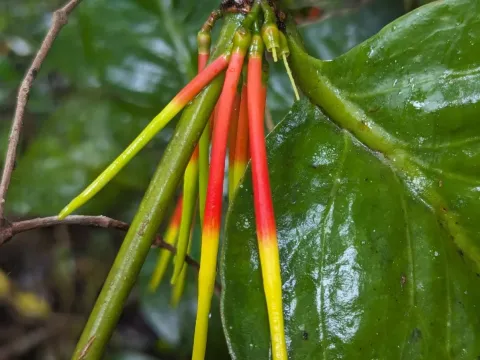
Botanically, Aetanthus species typically feature coriaceous (leathery) leaves and striking, often bright-colored tubular flowers. These morphological traits are adaptations to attract specific avian pollinators, particularly hummingbirds, which are abundant in their native habitats.
While not cultivated by humans, Aetanthus plays a specific role in the forest ecosystem. It serves as a food source for various birds and pollinators, and its presence can influence the physiological health of the host tree depending on the intensity of the infestation.
In silviculture and forestry management, Aetanthus can be viewed as an agent that impacts the growth rate and vigor of its host trees. When infestation density is high, the host tree may suffer from nutrient depletion, leading to premature branch dieback.
Management of the genus typically involves cultural practices rather than chemical control. Pruning and the mechanical removal of heavily infested branches are the most effective ways to manage the parasite in managed forest areas or botanical collections.
Environmental factors pose the greatest threat to Aetanthus populations, specifically the loss of habitat due to deforestation and climate change. As their host trees disappear, the parasitic population inevitably declines, highlighting their vulnerability.
There is minimal research on pests and diseases specific to Aetanthus, as it lacks economic value as an agricultural crop. However, natural pathogens that affect related genera in the Loranthaceae family likely exert some regulatory pressure on its growth.
Maintaining the balance between Aetanthus and its host environment is crucial for biodiversity conservation. Future studies may look at the chemical signals involved in host recognition, providing more insight into how these fascinating organisms successfully colonize new trees.