
Aetanthus nodosus
Aetanthus nodosus
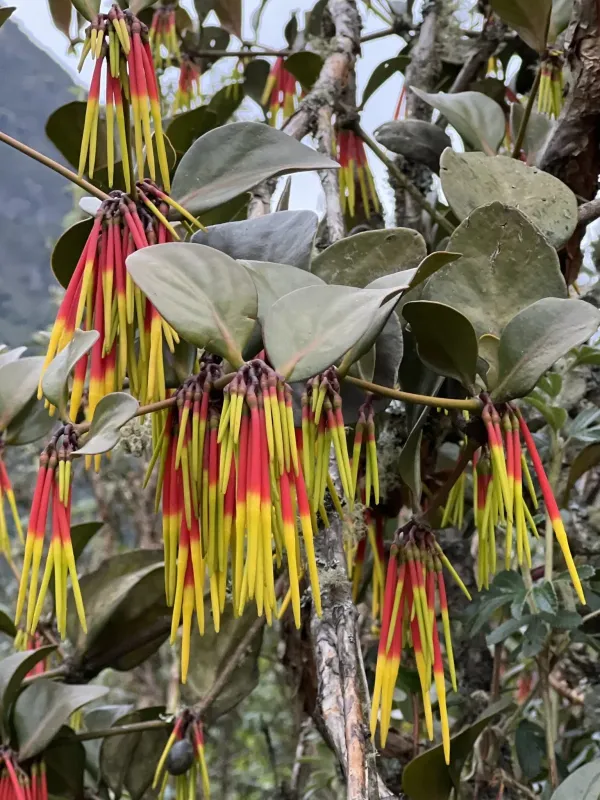
Description
Growing requirements
The species has strict requirements regarding its microclimatic environment. It thrives exclusively in high-humidity conditions characteristic of mountain cloud forests. It is highly sensitive to significant fluctuations in temperature and requires constant atmospheric stability to survive.
Soil factors are of secondary importance as the plant is not terrestrial. The host tree's bark serves as its primary substrate, providing the necessary mechanical support and access to nutrient flow. Its health is directly linked to the physiological state of the host species.
Light intensity is a critical factor for photosynthesis. As an epiphyte, Aetanthus nodosus is adapted to the filtered, diffuse light of the upper forest canopy. Excessive direct sunlight can be detrimental to the plant's delicate tissues, causing dehydration and stress.
Traditional agricultural techniques are inapplicable to this species. Cultivation attempts in botanical settings are notoriously difficult, as the germination process requires specific environmental cues, including the presence of the correct host species and associated microorganisms.
The primary prerequisite for the species' survival is the conservation of intact primary forest formations. The loss of old-growth trees due to deforestation leads to the immediate disappearance of the plant populations, making it a critical focus for conservation ecologists.
Main diseases and pests
The most significant threat to population stability is the degradation of the natural environment. Large-scale deforestation in the Andes removes the host trees required for the species' survival, preventing it from completing its life cycle and leading to regional extinction.
Climate change, particularly the warming of high-altitude zones, poses a risk to the plant's reproductive cycle. Shifts in timing and precipitation patterns can lead to a mismatch between the plant's flowering phase and the activity periods of its hummingbird pollinators.
Specific insect herbivores can cause damage to young shoots and leaves. While these interactions are naturally balanced within undisturbed ecosystems, anthropogenic disruptions can alter predator-prey dynamics, potentially leading to localized outbreaks of herbivorous insects.
Competition from invasive plant species poses a growing challenge. Faster-growing lianas and other aggressive epiphytes may outcompete Aetanthus nodosus for space on the tree branches, limiting its ability to establish new populations in fragmented forest areas.
Fungal infections can become a threat under conditions of persistent, stagnant moisture. These pathogens can damage the haustorial connections between the parasite and the host tree, leading to the gradual decline and eventual death of the Aetanthus individual.