
East Himalayan fir
Abies spectabilis
Description
Growing requirements
The East Himalayan fir (Abies spectabilis) belongs to the Pinaceae family and is a majestic evergreen conifer native to the high-altitude regions of the Himalayas. Growing at elevations between 2,500 and 4,000 meters, this species is perfectly adapted to cool, misty, and high-precipitation environments.
The tree thrives in deep, well-drained, and nutrient-rich soils. While it prefers slightly acidic soil conditions, it is sensitive to waterlogging, which often causes rapid root decay. Choosing a planting site with excellent soil aeration is essential for long-term health and growth vigor.
Climatic requirements focus on consistent moisture and protection from extreme heat. As a high-mountain species, it requires a cool climate throughout the year and is ill-suited for lowland areas with scorching summers or urban environments with high air pollution levels.
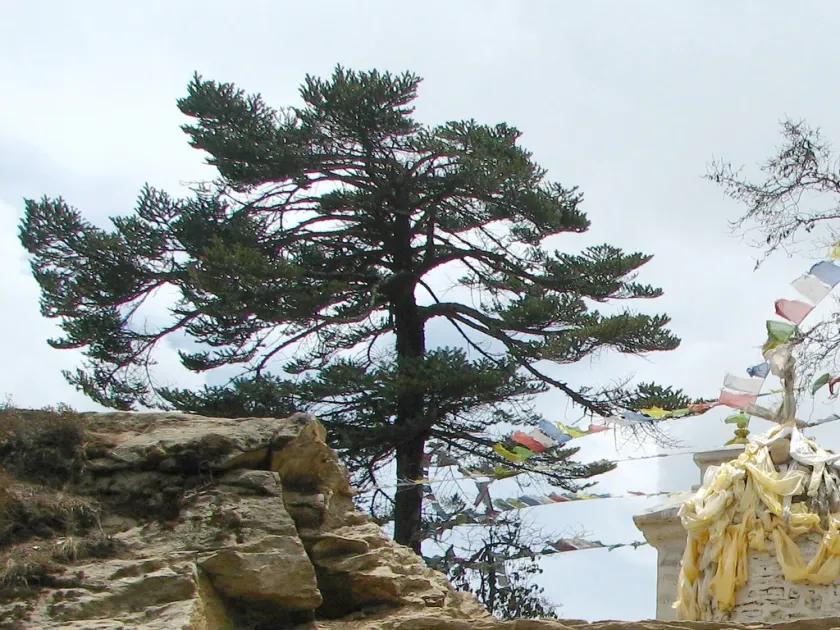
Botanically, Abies spectabilis is recognized by its broad, pyramidal crown and dark green, glossy needles that feature distinct silvery-white bands on the underside. Its strong, horizontal branches can spread wide, making it a prominent feature in large arboretums and landscapes.
The agricultural practice for this species involves consistent care during its formative years, including the application of organic mulch to retain soil moisture and regulate temperatures around the roots. Balanced fertilization designed for coniferous trees supports the sustained growth of this long-lived species.
Main diseases and pests
The main threats to the health of Abies spectabilis include fungal needle blights and rusts, which often appear in areas with poor ventilation and high humidity. Proactive sanitation, such as removing fallen needles and thinning overgrown branches, helps to reduce the spread of fungal spores.
Pest threats include various species of scale insects and aphids, which feed on the sap of needles and young shoots. If left untreated, severe infestations can significantly reduce the tree's vitality, making it prone to opportunistic secondary infestations by wood-boring beetles.