
Siberian fir
Abies sibirica Ledeb.
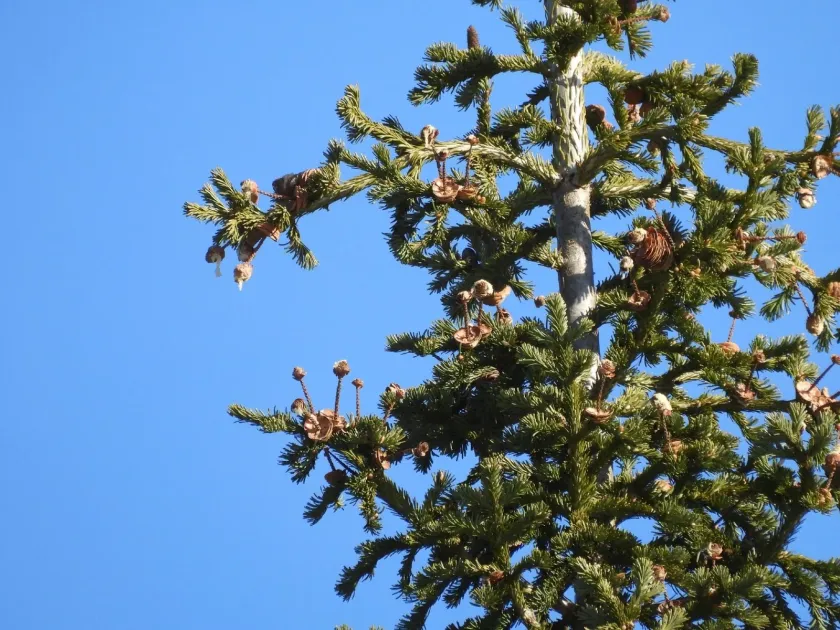
Description
Growing requirements
The Siberian fir (Abies sibirica Ledeb.) belongs to the Pinaceae family and is recognized for its exceptional cold tolerance. It is a dominant species in the taiga ecosystem, thriving in regions characterized by high humidity and moderate summer temperatures.
This species requires fertile, well-drained, and moisture-retaining soils. It performs best in deep loamy or sandy-loam soils, showing a low tolerance for waterlogged sites or extremely dry, rocky terrain.
A distinctive feature of the Siberian fir is its high shade tolerance. In natural settings, young saplings can develop effectively under the forest canopy, which makes the species essential for reforestation projects.
The tree is sensitive to atmospheric pollution, including smog and industrial gases, which limits its utility in urban forestry and landscape design near industrial centers.
In nursery settings, it is critical to provide adequate protection for seedlings during their initial years, as they are sensitive to both drought and direct, intense sunlight.
Yield
The Siberian fir is a significant source of essential oils, which are highly valued in the pharmaceutical and cosmetic industries for their antiseptic and anti-inflammatory properties.
The wood of this tree is widely utilized in the pulp and paper industry. Despite the lack of resin ducts, its lightweight and soft structure makes it suitable for producing various paper products and specialized timber.
Fresh conifer needles are processed to extract vitamins and biologically active components, which are increasingly used as additives in livestock feed production.
In ornamental horticulture, the Siberian fir is favored for its perfect conical shape and dark, dense foliage, which provides year-round aesthetic value to public parks and garden areas.
Commercial plantations of Siberian fir are managed to optimize the harvest of biomass, such as needles and young shoots, which serve as renewable raw materials for extraction industries.
Main diseases and pests
The Siberian moth (Dendrolimus sibiricus) represents the most significant biological threat to this species, as massive outbreaks can lead to widespread defoliation and forest degradation.
Needle rust, caused by various fungal pathogens, is a common ailment that reduces photosynthetic capacity and causes premature needle drop in densely planted stands.
Heart rot and various forms of root decay, caused by wood-decaying fungi, are common in aging stands, leading to decreased timber quality and structural instability during storms.
Seedlings in nurseries are highly susceptible to "damping-off" diseases, which require strict moisture management and regular soil sanitation to keep the planting stock healthy.
Late spring frosts present a recurring challenge, damaging succulent new growth and causing permanent deformation of the tree's leader and overall crown architecture.