
Noble fir
Abies procera Rehder
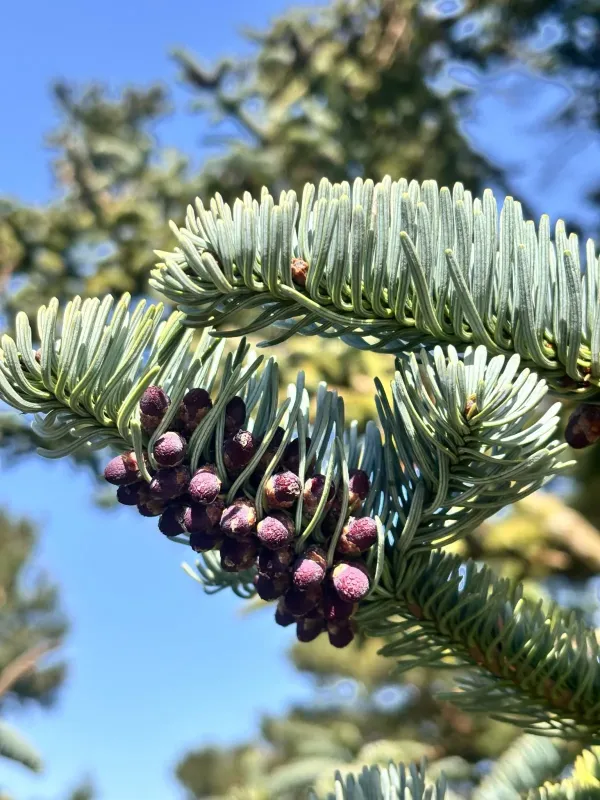
Description
Sowing dates
The propagation of Noble fir (Abies procera) is primarily conducted through seeds, which require stratification in a cold environment for approximately 30 to 60 days to break dormancy.
In nursery settings, seeds are typically sown in early spring into well-drained, acidic soil mixes to facilitate germination and early root development.
Seedlings are highly sensitive during their first two years and require partial shade to protect them from excessive ultraviolet radiation and soil moisture loss.
For commercial production, precision seeding techniques are utilized to ensure uniform spacing, which reduces the need for heavy thinning and labor-intensive manual work later on.
Optimal containerized production allows for rigorous control over irrigation and nutrient delivery, leading to more vigorous and uniform nursery stock before outplanting.
Growing requirements
Noble fir is a member of the Pinaceae family, native to the mountain ranges of the Pacific Northwest, thriving in cool, moist, and temperate maritime conditions.
The species prefers deep, nutrient-rich soils that offer excellent drainage, as the tree is notoriously intolerant to compacted or waterlogged site conditions.
While the tree is highly winter-hardy, it requires areas with good air circulation to mitigate the risk of fungal pathogens encouraged by stagnant, humid air.
It is not well-suited for urban environments with high levels of air pollution, as its needles are sensitive to industrial gases and particulate accumulation.
Strategic site selection is crucial for successful cultivation, prioritizing north-facing slopes in hilly terrain to maintain stable soil temperatures throughout the growing season.
Main diseases and pests
Noble fir plantations can be significantly impacted by various insect pests, with balsam woolly adelgids being one of the most destructive and difficult to manage.
Root rot diseases, such as Phytophthora, frequently occur in soils with inadequate drainage, leading to systemic failure of the tree's vascular system.
Needle cast fungi represent a constant threat in wet climates, causing premature needle drop which diminishes the tree's commercial value and overall health.
Integrated Pest Management (IPM) strategies are essential, involving regular monitoring and the use of site-specific cultural controls to reduce pathogen pressure.
- Monitor for signs of discoloration on needles and stems as early warning signals.
- Implement strict sanitation measures to remove infected debris from the plantation.
- Use pheromone traps to track the population density of major insect pests during their peak flight periods.
Harvesting
Noble fir is globally recognized as a premier species for the Christmas tree market due to its symmetrical growth, strong branches, and excellent needle retention.
Cultivation for market requires intensive annual pruning and shearing to develop the signature full, conical, and dense canopy desired by consumers.
Harvesting typically occurs when the tree reaches marketable size, usually between 7 to 10 years of age, depending on local site productivity and genetic lineage.
Beyond its ornamental use, the timber of Abies procera is highly valued in the construction and pulp industries for its structural stability and light color.
Sustainable harvesting practices in forest plantations ensure that soil fertility is preserved, often involving the retention of organic matter and systematic replanting schedules.