
Fanjingshan fir
Abies fanjingshanensis
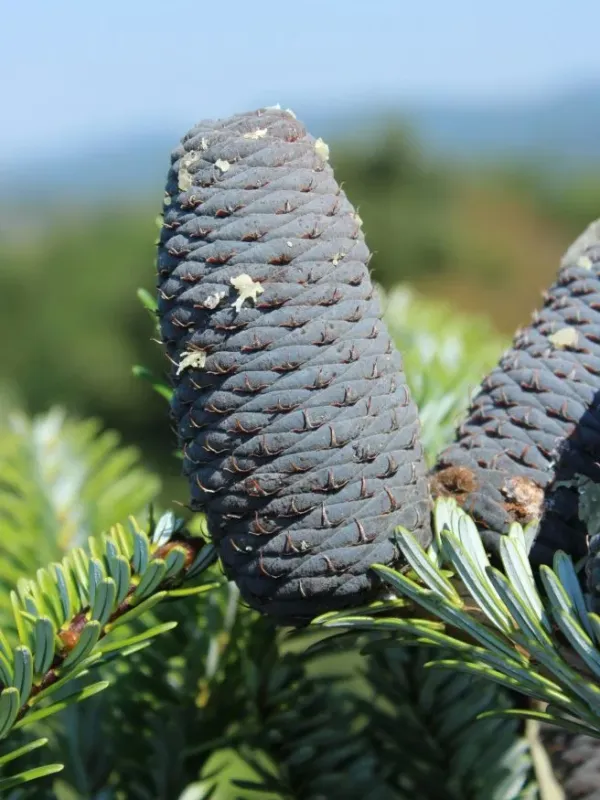
Description
Growing requirements
The Fanjingshan fir belongs to the Pinaceae family and is an endemic coniferous species restricted exclusively to the Fanjingshan Mountains in Guizhou Province, China. It is classified as a rare and endangered relict species, holding significant value for global biodiversity conservation.
The plant thrives at high elevations, typically between 2000 and 2300 meters above sea level. This habitat is characterized by a high-humidity environment with persistent fog, which provides the necessary moisture levels for the tree throughout the growing season.
Soil requirements for the Fanjingshan fir include acidic, nutrient-rich, and well-drained substrates. The root system is highly sensitive to waterlogging, necessitating excellent drainage to avoid root decay and ensure healthy development of the tree in both natural and controlled settings.
Climatic preferences involve cool, temperate conditions with moderate winters and mild summers. The species requires protection from intense solar radiation, especially during the sapling stage, and is intolerant of significant temperature fluctuations common at lower altitudes.
Agronomic management is challenging due to the species' slow growth rate and difficulty in propagation. Most cultivation efforts are focused on conservation nurseries, where researchers utilize precise moisture control and shade management to support the survival of these rare specimens.
Main diseases and pests
The Fanjingshan fir faces severe threats primarily due to its extremely narrow geographical distribution. Small, isolated populations are highly vulnerable to environmental shifts, making the species prone to rapid decline in the face of climate change.
Fungal diseases remain a significant threat, particularly in the high-humidity mountainous areas where the trees reside. These pathogens often attack the needles and twigs, causing foliage loss and reducing the tree's overall vigor over time.
Insect pests, such as aphids and various conifer-specific caterpillars, pose risks to the tree's development. While they may not be lethal in small numbers, the limited population size of the species makes any damage a threat to its long-term survival.
Competition from more aggressive plant species in the understory often hinders natural regeneration. Without intervention to clear competing vegetation, young firs struggle to obtain the light and nutrients required to reach maturity.
Phytosanitary management is essential for preserving the remaining trees. Any physical injury to the bark must be treated immediately to prevent the entry of wood-decay fungi, which can compromise the structural integrity of these ancient trees.