
Dense fir
Abies densa
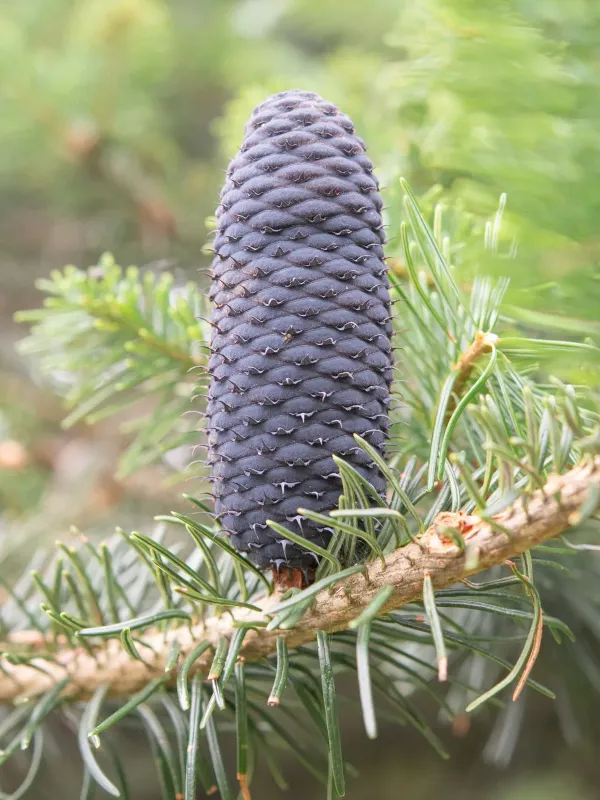
Description
Growing requirements
The dense fir (Abies densa) belongs to the Pinaceae family and is an evergreen coniferous tree. Native to the eastern Himalayas, including Nepal, Bhutan, and parts of India, these trees can grow up to 60 meters tall in their natural high-altitude environment.
The cultivation of this species requires specific soil conditions, prioritizing deep, well-drained, and nutrient-rich loams. Since the species is native to humid mountainous regions, preventing water stagnation in the root zone is crucial to avoid root rot and ensure healthy development.
Climatic requirements focus on a cool, moist atmosphere. Dense fir does not perform well in hot or excessively arid environments, as high temperatures often lead to needle desiccation and overall stress, which inhibits the tree's natural growth cycle and vitality.
While the tree shows shade tolerance during its early developmental stages, it benefits from sufficient diffused light as it matures. Proper spacing is essential in plantation setups to allow air circulation, which helps manage humidity levels and light exposure across the canopy.
Agrotechnical maintenance includes monitoring soil moisture levels and ensuring the absence of competitive vegetation that might hinder the early growth of seedlings. The species prefers stable mountain climates, making site selection the most important factor in its successful introduction.
Yield
The primary economic use of dense fir is in the timber industry. Its wood is valued for its durability and structural integrity, making it suitable for high-quality carpentry, construction materials, and diverse woodworking applications within its native regions.
Ecologically, the species provides vital services by stabilizing steep mountain slopes. Its dense root network is essential for preventing soil erosion, while the canopy helps regulate local water cycles and maintains the humidity required for diverse highland biodiversity.
In landscaping and ornamental forestry, Abies densa is prized for its lush, dark-green foliage and elegant growth habit. It serves as a significant feature in large-scale park designs and arboretums where cool, mountain-like microclimates can be replicated.
Secondary uses include the extraction of aromatic oils and resins. These extracts possess antiseptic properties and have been utilized in traditional practices, suggesting potential in niche markets for natural forest products and medicinal ingredients.
Sustainable yield management requires long-term rotation planning. Given the slow-growing nature of the species, plantations must be managed with a focus on conservation and long-term forest health to balance current timber extraction with future ecological stability.
Main diseases and pests
Dense fir is susceptible to several fungal diseases, particularly needle cast, which is triggered by persistent high humidity. This condition causes needles to yellow and drop prematurely, leading to reduced photosynthetic capacity and weakened immune responses.
Root rot represents a severe threat to young stands, especially when drainage is inadequate. Pathogenic fungi thrive in waterlogged soil, quickly targeting the root system and causing irreversible damage to the tree's structural stability and nutrient uptake.
Insect pests, including various aphids and mites, are common threats. They feed on the sap of young needles and shoots, leading to stunted growth, discoloration, and increased vulnerability to secondary infections from viruses or bacterial pathogens.
Borer insects, such as bark beetles, pose a major risk to mature or stressed trees. These pests penetrate the bark, disrupting sap flow and often killing the tree if infestation levels are high. Monitoring and early intervention are essential for control.
Effective management includes regular sanitary inspections to identify and remove infected individuals before the infestation spreads. Integrating biological control measures alongside careful site maintenance is the best approach to preserving the health of dense fir populations.