

Otaman
Wuxi Longbang Chemical & Industrial Co., Ltd.
Herbicides
0
0
·
4.6K
17 offers
0.47 €per 1 l
Buy
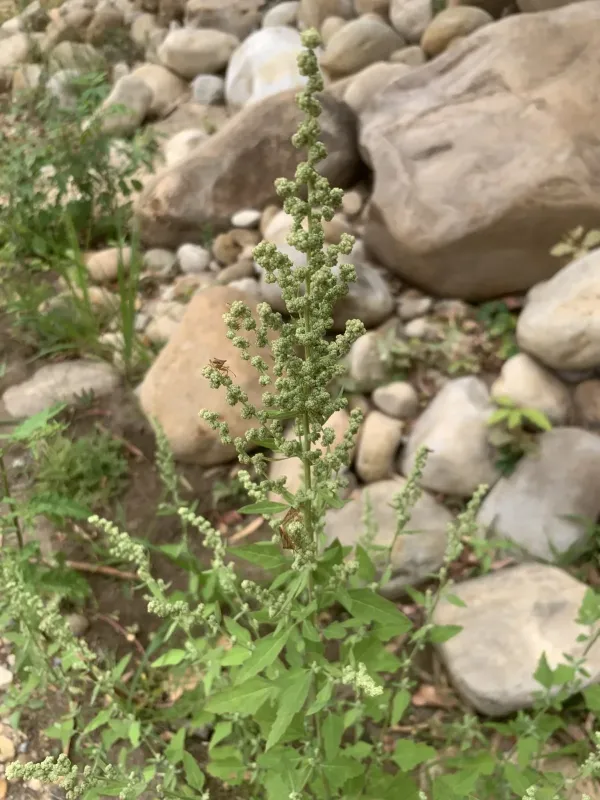
Fat hen (Chenopodium album) is a widespread annual weed belonging to the Amaranthaceae family. It is easily identified by its fast growth habit and the powdery, white mealy coating found on the underside of its leaves.
The plant has an erect, often branched stem that can reach heights of 20 to 150 cm. The leaves are typically diamond-shaped or triangular with irregular serrated margins, often turning reddish or purple as the plant matures.
The root system is a robust taproot, which allows the plant to access moisture in deeper soil layers and makes it highly drought-tolerant compared to many other weed species.
Flowers are tiny, green, and clustered in dense spikes or panicles at the ends of branches. They are inconspicuous but produce an immense quantity of small, shiny black seeds that can remain viable in the soil for decades.
Seedlings are small and can emerge over a long period during the growing season, which complicates the timing of mechanical and chemical weeding operations in agricultural fields.
Chenopodium album is a cosmopolitan species, found across diverse environments including arable lands, gardens, roadsides, and waste grounds. It thrives in nitrogen-rich, fertile soils.
It is a significant competitor in major crops such as wheat, corn, sugar beets, and sunflowers. Its ecological flexibility allows it to adapt to various soil types and moisture levels.
The weed is particularly problematic in minimum-tillage systems where seeds remain near the surface, facilitating rapid germination. It also exploits gaps in crop stands caused by poor establishment.
Because it is a pioneer species, it rapidly colonizes disturbed ground, making it a constant challenge in both conventional and organic farming systems globally.
Agricultural operations, including the movement of contaminated machinery and the dispersal of seeds by wind and water, facilitate the rapid spread of fat hen across large geographical areas.
Fat hen is a highly competitive weed that exerts significant pressure on crops by monopolizing essential nutrients, particularly nitrogen, and water, leading to substantial yield losses.
Due to its rapid vertical growth, it efficiently shades out younger crop seedlings, severely inhibiting their development during critical stages of the growing season.
The plant serves as an alternate host for various pests, including aphids and leaf miners, and can harbor viruses that are subsequently transmitted to important agricultural crops.
Harvesting becomes difficult when fields are heavily infested, as the succulent stems of the weed increase the moisture content of the harvested grain and introduce foreign material.
In addition to crop competition, the presence of fat hen in agricultural produce can downgrade the quality of harvested products, potentially causing significant economic losses for farmers.
Effective control requires an integrated approach, starting with good agricultural practices such as crop rotation, which breaks the life cycle of the weed and allows for varied management tools.
Mechanical control via timely inter-row cultivation is highly effective when the weed is in the seedling stage. Deep plowing can also help bury seeds, reducing their chance of germination.
Chemical control involves the application of selective herbicides tailored to the specific crop. It is critical to apply these agents before the weed reaches the 4-6 leaf stage to ensure efficacy.
Continuous monitoring and scouting of fields are essential to identify infestations early. Spot-treating small areas can prevent the massive seed bank accumulation that makes long-term control so difficult.


