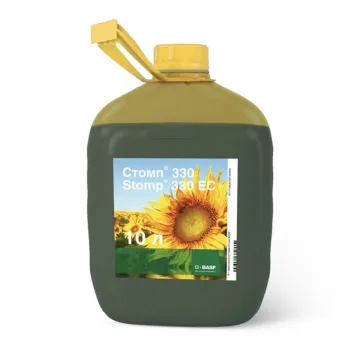
Terbi-S
Shandong Binnong Technology Co., Ltd., Китай, Superus Co. LTD, Китай
Herbicides
0
0
·
56
6 offers
4.98 €per 1 l
Buy
Annual grass weeds belong to the Poaceae family. These plants complete their life cycle within a single growing season. Common representatives include wild millet, crabgrass, wild oats, and foxtail species.
They are characterized by narrow, linear leaves with parallel venation and jointed, stem-like stalks. Their fibrous root system develops rapidly, allowing them to extract moisture and nutrients efficiently from the topsoil.
These weeds reproduce exclusively by seeds, which exhibit high dormancy and longevity. They can remain viable in the soil for several years, forming a significant soil seed bank that challenges weed management.
Identifying these weeds during early growth stages is difficult due to their resemblance to cereal crops. Distinguishing features include the structure of the leaf ligule and the presence or absence of auricles at the leaf-sheath junction.
Their biological resilience and ability to adapt to diverse climatic conditions make them dominant competitors in many agro-ecosystems when crops are not adequately protected.
These weeds are common in arable lands, preferring fertile, well-structured soils. They frequently infest fields of corn, sunflowers, small grains, and sugar beets, where conditions are favorable for their development.
They cause significant damage in row crops where there is ample space and light during the early stages of crop development. They rapidly occupy rows, outcompeting crops for available resources.
Annual grasses often spread along field margins, road verges, and uncultivated lands. Seeds are dispersed by wind, water, or agricultural machinery moving between fields during cultivation.
Massive germination typically occurs when soil temperatures reach 10–12 degrees Celsius. This timing often overlaps with the planting season of major spring crops, increasing the competitive pressure.
Infestations can be sporadic or uniform, depending on previous soil management and seasonal weather patterns. Constant monitoring of field edges is essential to reduce the overall weed pressure.
The primary harm is the depletion of soil nutrients and moisture, which are critical for crop yield formation. In high-density infestations, these weeds can compete for up to 50% of the available resources.
Annual grass weeds serve as hosts for various plant pathogens, including rusts, smuts, and powdery mildew. They also attract pests that can migrate to crops once the weeds are controlled or harvested.
Due to their aggressive growth, they shade young crop seedlings, causing them to become stunted, weak, and ultimately reducing the overall productivity of the field.
Their presence complicates the harvesting process, as green weed biomass increases the moisture content of the grain, leading to higher drying and post-harvest processing costs.
Agrotechnical control involves deep fall plowing to bury seeds at depths that inhibit germination. Proper seedbed preparation is also vital to stimulate germination and destroy weed seedlings before planting.
Crop rotation is a cornerstone of management, as alternating crops with different planting times and cultivation technologies disrupts the life cycle of annual grass weeds.
Chemical control focuses on the use of selective graminicides. The optimal application window is the 2–4 leaf stage, when the weeds are most susceptible to the herbicide's active ingredients.
Soil-applied herbicides are effective in creating a protective layer that prevents weed seed germination in the upper soil profile, which is particularly beneficial for corn and sunflower production.
Rigorous seed cleaning is essential to prevent the introduction of weed seeds to new areas, and maintaining clean field margins helps prevent the re-entry of seeds into the main production acreage.