

Description
How to tell it apart
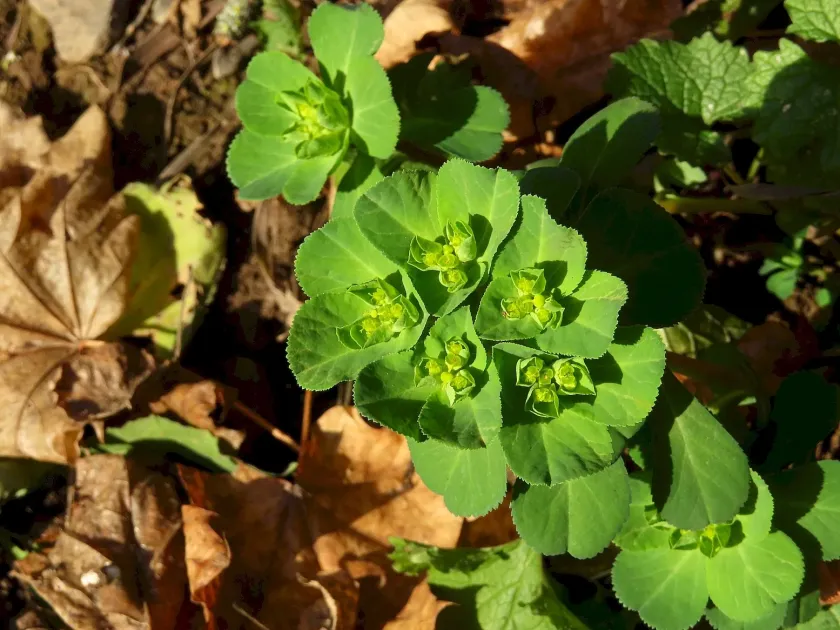
Sun spurge (Euphorbia helioscopia) is an annual herbaceous weed belonging to the Euphorbiaceae family, commonly found in agricultural landscapes.
The plant typically reaches a height of 10 to 30 cm, featuring an upright, often branched stem that displays characteristic serrated leaves towards the tips.
The most distinctive feature of the plant is the milky white sap that exudes from any part of the stem or leaves when damaged or broken.
Its inflorescence consists of terminal umbels surrounded by yellowish-green bracts, which are often mistaken for leaves by inexperienced observers.
The fruit is a smooth, three-valved capsule containing small, pitted, brownish-gray seeds that are easily dispersed by water and mechanical movement.
Where it grows
This weed thrives in nutrient-rich, disturbed soils and is commonly found in gardens, vegetable fields, cereal crops, and neglected lands.
Sun spurge prefers open, sunny locations with adequate moisture, allowing it to establish quickly in cleared or cultivated soil profiles.
It is widespread across temperate regions and is considered a frequent inhabitant of areas affected by intensive farming practices.
The plant has a high seed production rate, and seeds can remain viable in the soil seed bank for several years until favorable conditions occur.
Germination typically occurs in early spring, giving the plant a competitive advantage over slower-growing or late-planted crops.
Harm it causes
Sun spurge acts as a strong competitor for essential resources such as nitrogen, water, and sunlight, significantly reducing crop growth rates.
The milky sap contains diterpene esters, which are toxic to livestock and can cause irritation or digestive issues if ingested through contaminated forage.
Heavy infestations reduce overall crop yield quality and create challenges for harvesting machinery due to the succulent stems clogging harvest mechanisms.
The weed acts as an alternative host for various pests and pathogens, potentially increasing the pressure of plant diseases within the field.
Contamination of harvested grain with spurge seeds lowers the market value and requires additional mechanical cleaning and processing costs.
How to control
Mechanical control is effective in the early stages; shallow tillage and hand-pulling before seed set can significantly reduce the weed population.
Crop rotation incorporating competitive crops that shade the ground helps suppress sun spurge development throughout the growing season.
Chemical control using systemic herbicides is recommended when the plant is in its vegetative stage before it produces flowers and seeds.
Proper calibration of spraying equipment ensures optimal coverage and efficacy of selected herbicides in mixed weed populations.
- Early application of post-emergence herbicides for higher efficiency.
- Use of soil-acting herbicides to prevent subsequent germination flushes.
- Regular monitoring of field edges to prevent the spread of mature seeds.
Reference
Connections · Sun spurge
Most often together:
Marketplace
Products · 4


Biology
Taxonomy
- Latin name
- Euphorbia helioscopia
- Family
- Молочайные
- EPPO code
- EPHHE