
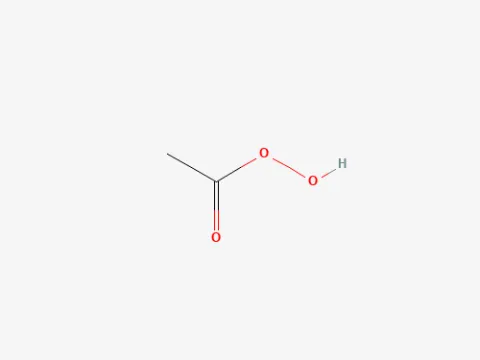
Peracetic acid
Peracetic acid (PAA) is a powerful oxidizing agent that functions by releasing active oxygen upon contact with pathogens. This process triggers protein denaturation, destruction of cellular membranes, and oxidation of the microorganisms' enzyme systems.
What the section contains
Peracetic acid
Due to its high reactivity, the substance effectively inactivates disease-causing agents directly on the surface of plant parts, containers, or greenhouse structures. The oxidative stress created by the acid makes it impossible for fungal spores, bacteria, and viruses to survive.
An important feature of this compound is its environmental safety when used correctly. During decomposition, peracetic acid breaks down into water, oxygen, and acetic acid, which do not accumulate in the harvest or pollute the environment.
Products based on peracetic acid do not induce resistance in harmful organisms. This is because oxidative damage to cellular structures is a non-specific and complex process, to which pathogens cannot adapt through mutations.
The substance lacks systemic action, working exclusively as a contact agent. It provides a rapid shock effect on epiphytic microflora, making it indispensable for disinfection and protection against surface infections.
Peracetic acid is used as a broad-spectrum antiseptic to combat a complex of phytopathogens, including powdery mildew, gray mold (Botrytis), early blight (Alternaria), and various types of bacterial diseases.
It is used for the disinfection of seeds, seedlings, and fruits post-harvest, which significantly reduces losses during storage. The preparation effectively suppresses the development of mold fungi on vegetable and fruit produce.
In greenhouses, the substance is essential for sanitizing facilities, hydroponic systems, drip lines, and agricultural tools. It successfully destroys biofilms that form in irrigation systems.
- Bacteria (including Gram-negative and Gram-positive strains).
- Fungal spores and their conidia.
- Viral particles on the surface of work tools.
- Algae that clog irrigation systems in greenhouses.
The use of this product allows for maintaining a high level of phytosanitary cleanliness in nurseries, which is vital for preventing the transfer of diseases between plant batches.
Application rates and concentrations of working solutions vary significantly depending on the task: from surface disinfection to treatment of growing plants.
For the disinfection of empty cultivation equipment (greenhouses, tables, crates), the concentration of the solution can reach 0.1–0.5% of active ingredient. Treatment is performed by spraying or wiping.
For treating growing crops, the concentration must be significantly lower (usually 0.01% to 0.05%) to avoid chemical burns to leaf tissues. Sensitivity testing on specific varieties is always recommended.
Pre-harvest intervals for treated fruits are minimal because the active substance decomposes rapidly. However, always consult the manufacturer's regulations for each specific product formulation.
Preparation of the working solution requires the use of enameled, plastic, or glass containers, as the substance is an aggressive oxidizer that can react with metals.
Peracetic acid is extremely aggressive toward metals, especially aluminum, iron, and galvanized surfaces; therefore, equipment made of corrosion-resistant materials is required.
When working with concentrated solutions, personal protective equipment (goggles, gloves, and respirators) must be used, as the substance has a pronounced irritating effect on mucous membranes and skin.
The product is sensitive to temperature and light; therefore, it should be stored in a cool, dark place in its tightly closed original container, avoiding direct sunlight, which causes accelerated degradation.
Mixing peracetic acid with other pesticides, alkaline products, or fertilizers without prior compatibility testing is not recommended, as this may lead to unpredictable chemical reactions or loss of efficacy.
The efficacy of the product decreases in the presence of high levels of organic matter, so it is recommended to conduct mechanical cleaning of surfaces to remove dirt and plant debris before disinfection.