
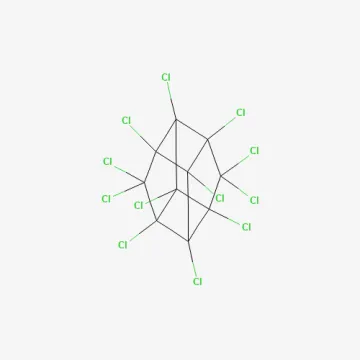
Perchlordecone
Description
Mode of action
Perchlordecone is a representative of the organochlorine chemical class, characterized by high biological efficacy. The mode of action involves the disruption of the nervous system by altering the permeability of nerve cell membranes to sodium and potassium ions.
The substance exhibits both contact and stomach poison activity against various pests. Upon exposure, the target organism experiences rapid tremors and paralysis, eventually leading to death due to irreversible damage to the neural pathways.
A distinctive feature of this group is its high persistence in the environment. This property once provided long-term residual protection in agricultural fields but has now become a significant liability due to ecological concerns.
The molecular structure of perchlordecone makes it highly resistant to chemical and biological degradation, including sunlight and microbial breakdown. This stability means that the compound remains active in the soil for years after application.
Due to its high environmental persistence and potential for bioaccumulation, the use of perchlordecone is strictly limited globally. International environmental standards now emphasize the transition to more sustainable and less toxic alternatives.
What it targets
Historically, perchlordecone compounds were employed as broad-spectrum insecticides for the control of various pests, primarily beetles (Coleoptera) and various lepidopteran species that damage crops.
They were particularly effective against soil-borne pests, such as wireworms, where the compound’s stability ensured protection for root systems throughout the entire growing season of long-duration crops.
In addition to agricultural use, these compounds were applied for grain storage protection. They provided a robust barrier against infestations of grain weevils and other stored-product insects, maintaining efficacy over extended storage periods.
Forestry management once utilized these compounds to manage massive outbreaks of defoliating insects. Their application helped preserve tree stands by preventing significant defoliation and subsequent tree weakening.
However, the risks associated with pesticide residue accumulation have led to a complete phase-out in most agricultural applications to protect consumer health and ensure the safety of food products.
Restrictions
The use of perchlordecone is heavily regulated by international treaties, such as the Stockholm Convention, which classifies it as a Persistent Organic Pollutant (POP) requiring global monitoring and restriction.
Primary limitations include the compound's high toxicity to non-target organisms, particularly honeybees and aquatic wildlife. The risk of runoff into water bodies can cause long-term damage to entire aquatic ecosystems.
Occupational safety is a paramount concern; any handling of these substances requires specialized personal protective equipment to prevent chronic exposure, as these compounds can accumulate in adipose tissue.
Agricultural application requires strict adherence to buffer zones to avoid contaminating neighboring land, pastures, or water sources. Furthermore, soil contamination remains a major barrier to subsequent land use after treatment.
The current agricultural standard involves replacing such persistent agents with modern, targeted pest management strategies that integrate biological controls and low-residue chemicals to maintain environmental health.
Status in the European Union
Not approved in the EU
- CAS number
- 2385-85-5
EU status is for reference only and does not replace national registration in your country.