
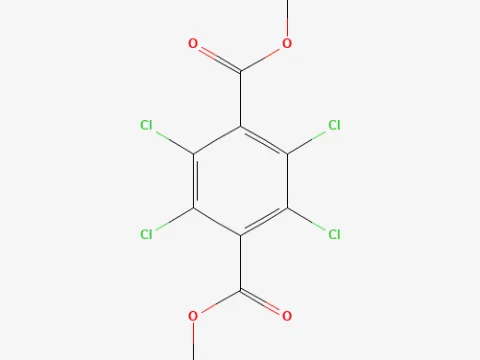
Chlorthal-dimethyl
Chlorthal-dimethyl belongs to the chemical class of benzoic acid derivatives. It acts as a selective pre-emergence herbicide that inhibits cell division in the meristem of germinating weed seeds.
What the section contains
Chlorthal-dimethyl
The substance is absorbed by germinating weed seeds directly from the soil. It interferes with the microtubule formation process, effectively halting root and shoot development at the earliest growth stages.
The compound exhibits high selectivity, allowing crops to grow without inhibition. It does not translocate systemically through plant tissues; instead, it creates a protective barrier in the topsoil layer.
The herbicide's efficacy is highly dependent on soil moisture and the quality of seedbed preparation. On dry soils, activity may be reduced, necessitating soil incorporation or irrigation.
The residual protective effect lasts between 6 to 10 weeks, providing reliable weed suppression during the critical early development phase of vegetable crops.
Chlorthal-dimethyl is used to control a broad spectrum of annual grasses and some broad-leaved weeds that reproduce via seeds.
Primary target weeds include various species of foxtail, barnyard grass, annual bluegrass, common lambsquarters, and common purslane. The product prevents their emergence throughout the season.
Due to its selective properties, this herbicide is widely employed in cruciferous, solanaceous, and alliaceous vegetable crops.
Common applications include the cultivation of cabbages, onions, garlic, strawberries, and potatoes. It is also frequently used in ornamental nurseries for tree and shrub protection.
It is important to note that this substance is largely ineffective against established perennial weeds or those that propagate vegetatively.
Dosage rates for chlorthal-dimethyl vary depending on soil texture. Lighter sandy soils require lower doses, whereas heavier loamy soils with higher organic matter content require higher application rates.
The herbicide should be applied before crop sowing or immediately after, but strictly prior to the emergence of weed seedlings. Post-application soil disturbance should be avoided to maintain the chemical barrier.
Maximum efficacy is achieved on well-prepared, fine-textured, and moderately moist soils. Large soil clods can cause uneven distribution and reduce overall weed control performance.
When preparing tank mixes, always conduct a compatibility test. Avoid mixing with other herbicides unless the manufacturer specifies it is safe to do so.
Always adhere to the specific instructions provided on the product label, as formulations and concentrations of the active ingredient may vary significantly.
Application requires careful attention to temperature and humidity levels. High temperatures during or immediately after application may accelerate the degradation of the active ingredient.
Prevent spray drift onto adjacent sensitive crops. Proper personal protective equipment must be worn during handling and application to ensure operator safety.
Crop rotation considerations are necessary. While the substance degrades relatively quickly, residual levels in certain soil types may potentially impact sensitive follow-up crops.
Storage must be in a cool, dry area away from children and pets, ensuring the original packaging remains tightly sealed.
Avoid contamination of water bodies, as the active substance can pose toxicity risks to aquatic organisms and sensitive ecosystems.